
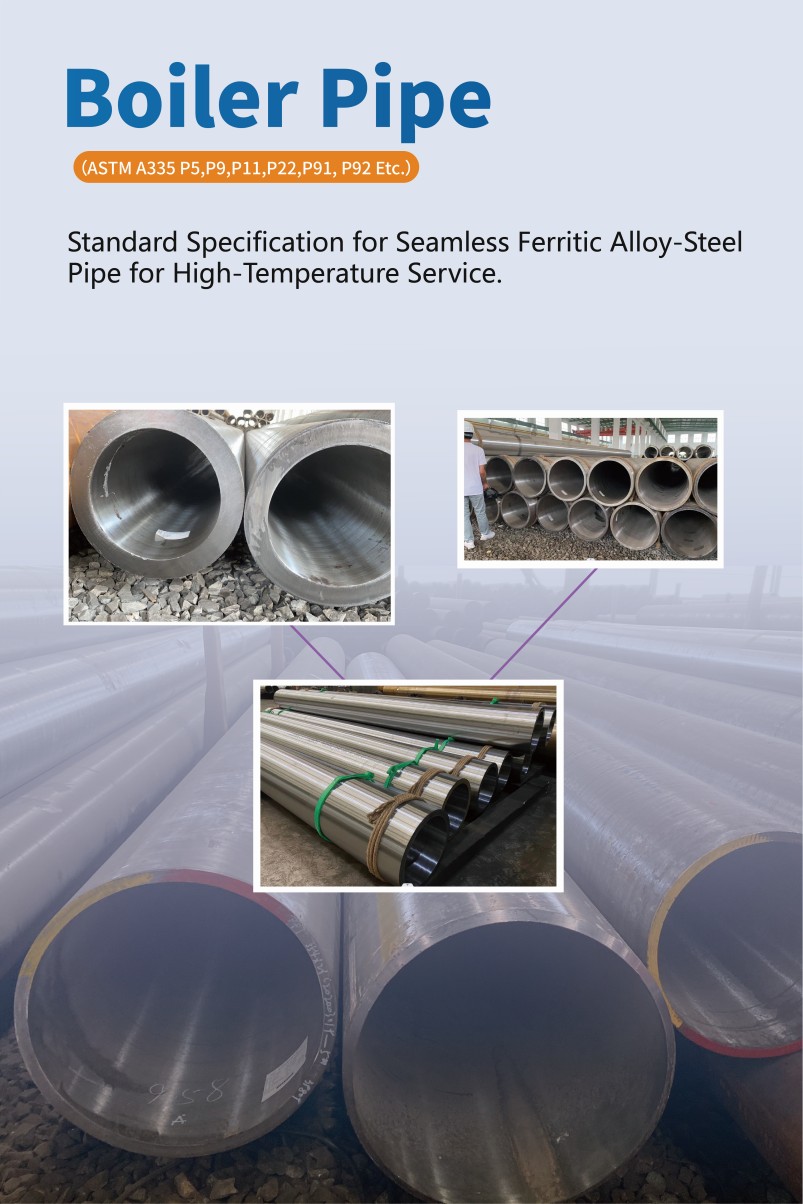
As the high-end equipment, power boiler, and chemical equipment sectors continue to upgrade in 2026, the performance requirements for piping—specifically regarding high-temperature, high-pressure, and corrosion-resistant capabilities—have risen significantly. As a category of high-performance piping, seamless alloy steel pipes are playing an increasingly pivotal role in fields such as petrochemicals, power generation, and boiler manufacturing. Among these, ASTM A335 series chromium-molybdenum alloy steel pipes have become the material of choice for demanding industrial environments, thanks to their excellent high-temperature resistance, creep resistance, and corrosion resistance. This article systematically outlines the characteristics and applications of mainstream grades—such as A335 P5, P9, P11, P22, and P91—and provides professional insights to guide procurement decisions.
I. Detailed Overview and Key Applications of ASTM A335 Series Materials
The ASTM A335 standard encompasses various grades of ferritic alloy steel seamless pipes; due to differences in chemical composition and mechanical properties, each grade is suited to specific temperature, pressure, and corrosive environments.
1. A335 P5 (Equivalent to domestic grades 12Cr5Mo/1Cr5Mo)
P5 is one of the most representative grades in the ASTM A335 standard, featuring a chromium content of 4.00–6.00% and a molybdenum content of 0.45–0.65%. This material complies with ASTM A335/A335M and ASME SA335/SA335M standards, offering a tensile strength of ≥415 MPa and a yield strength of ≥205 MPa.
P5 steel pipes exhibit exceptional heat and creep resistance in high-temperature environments up to 540°C. Key applications include:
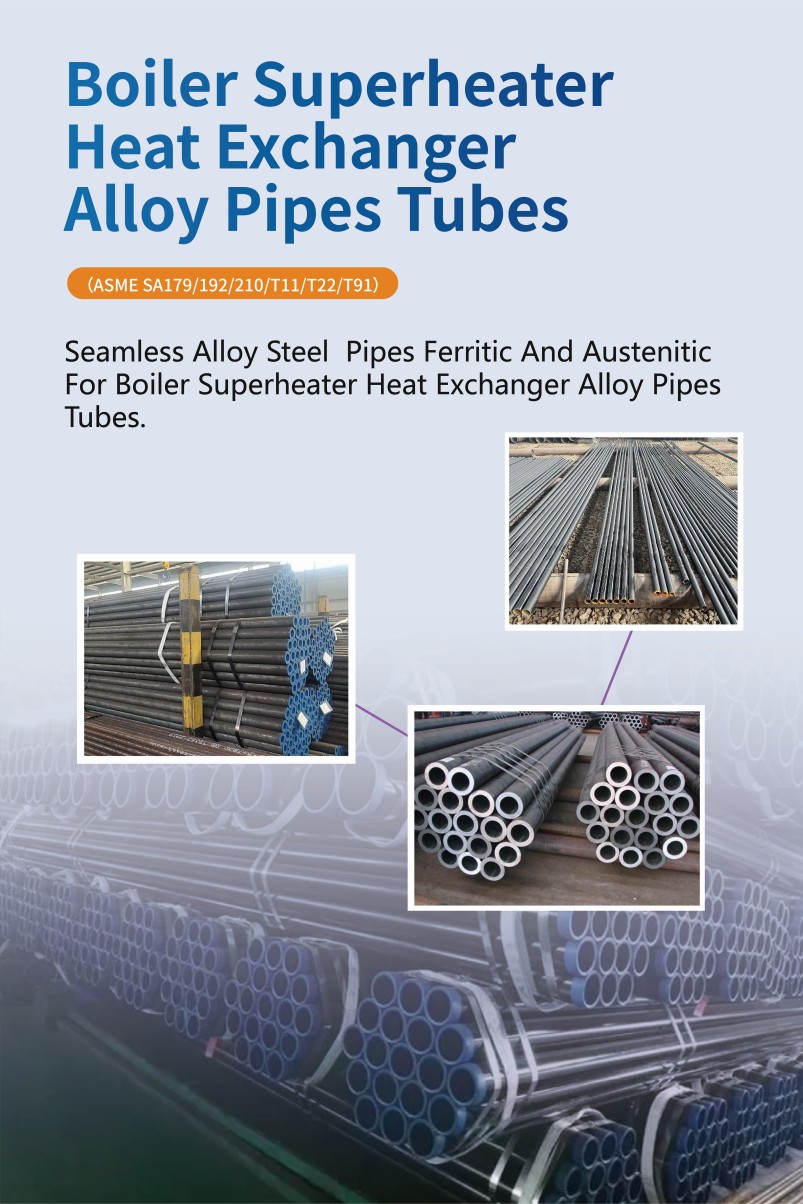
Power Industry: Boiler superheaters, reheaters, and main steam piping; suitable for high-pressure boiler components operating at pressures ≥9.8 MPa and temperatures between 450°C and 650°C.
Petrochemical Industry: Critical components such as transfer piping for hydroprocessing reactors, transfer lines for cracking units, and catalytic reforming units. In sulfur-containing oil and gas media, the corrosion rate of P5 steel is 40% lower than that of 304 stainless steel. Structural component manufacturing: Mechanical parts such as oil drill pipes, automotive drive shafts, and rolling bearing rings.
2. A335 P9
P9 belongs to the high-chromium series, with a chromium content of 8–10% and a molybdenum content of 0.9–1.1%; it offers excellent high-temperature oxidation resistance and high strength. This piping is primarily used in the petrochemical industry and boiler equipment, suitable for high-pressure, high-temperature operating environments (maximum working pressure >9.8 MPa; temperatures up to 650°C). P9 is commonly used to manufacture pressure-bearing components such as boiler superheaters and reheaters, and finds wide application in refinery catalytic cracking units and high-temperature sulfur-containing pipelines.
3. A335 P11
P11 is a low-alloy chromium-molybdenum steel with a chromium content of 1.0–1.5% and a molybdenum content of 0.44–0.65%, offering good weldability and medium-temperature strength. Its performance surpasses that of ordinary seamless steel pipes; it is lighter in weight while providing equivalent bending and torsional strength.
P11 is primarily used in:
Heat exchangers and medium-temperature steam transmission pipelines in the petrochemical sector
High-temperature piping systems in industries such as oil extraction, natural gas transmission, and thermal power generation
Applicable temperature: ≤550°C
P11 is the preferred upgrade material when operating temperatures exceed the upper limit for carbon steel pipes (ASTM A106).
4. A335 P22 (equivalent to domestic grade 12Cr2MoG)
P22 contains 2.25% chromium and 1% molybdenum and is designed specifically for high-temperature, high-pressure environments, with an operating temperature of up to 580°C and pressure ≥9.8 MPa. The material combines high creep-rupture strength with good long-term ductility.
P22 is widely used for main steam piping and headers in power plant boilers, superheaters and steam piping in the petrochemical industry, and high-pressure piping systems in nuclear power equipment. Applicable temperature: ≤600°C. It plays a vital role in various heated-surface piping applications across thermal power, nuclear power, and petrochemical sectors. 5. A335 P91 (equivalent to the domestic grade 10Cr9Mo1VNb)
P91 is a high-performance grade within the A335 series, featuring a chromium content of 8–9.5% and a molybdenum content of 0.85–1.05%, with the addition of micro-alloying elements such as vanadium (V) and niobium (Nb). It offers a yield strength of ≥415 MPa and a tensile strength of ≥585 MPa, and is suitable for operating temperatures up to 625°C.
The core advantages of P91 include:
Its allowable stress in the 550–650°C range is double that of traditional steels, allowing for a 40% reduction in pipe wall thickness under identical conditions.
It exhibits excellent high-temperature strength, oxidation resistance, and creep resistance.
Its rupture strength at 600°C is 3–4 times higher than that of comparable materials.
P91 is primarily used for main steam piping in supercritical and ultra-supercritical power units, high-pressure piping in nuclear power plants, and superheaters in large power station boilers. In recent years, it has been widely adopted for main steam piping in large-scale power plants in my country.
II. Key Considerations for Purchasing Alloy Steel Pipes
1. Precise Material Selection Based on Operating Conditions
Material selection must be based on suitability for the specific operating conditions. For high-temperature, high-pressure boiler equipment, specialized boiler alloy grades such as 12Cr1MoVG and 15CrMoG are appropriate; P5 and P9 grades are preferred for refinery catalytic cracking units and sulfur-containing pipelines; and higher-grade materials like P91 are required for the main steam piping of supercritical units. For operating temperatures exceeding 600°C, even higher-grade materials such as P92 should be considered. Avoid making decisions based solely on price—alloy pipes cost 30–50% more than ordinary carbon steel, and excessively low quotes may indicate substandard chemical composition or manufacturing defects.
2. Strict Verification of Material Composition and Standards
During procurement, it is essential to confirm that the material's chemical composition meets standard requirements (e.g., P5 requires a chromium content of 4.0–6.0% and a molybdenum content of 0.45–0.65%). Suppliers must provide spectral analysis reports and complete Material Test Certificates (MTC). Note specifically that 12% of samples circulating in the market have chromium and molybdenum contents below the minimum standard limits. For critical projects, third-party sampling and testing (e.g., by SGS) are recommended. 3. Focus on Supplier Qualifications and Testing Capabilities
High-quality suppliers should hold ISO9001 quality system certification and possess hot-rolling and cold-drawing/cold-rolling production lines, as well as compliant production licenses. They should be equipped with professional testing facilities capable of performing chemical composition analysis, mechanical property testing, and non-destructive testing (MT/UT), and provide comprehensive inspection reports upon delivery. Priority should be given to manufacturers holding a Special Equipment Manufacturing License.
4. Prioritize Heat Treatment and Process Control
The heat treatment process (normalizing + tempering) for alloy steel pipes directly affects material properties. It is essential to verify that the production process employs ladle refining (to reduce sulfur and phosphorus impurities) and a dual heat treatment of normalizing and tempering (to prevent grain coarsening). For high-alloy steels such as P91, which are prone to hydrogen-induced delayed cracking during welding, a combined argon-arc and electric welding process must be used, and preheating temperatures strictly controlled.
5. Verify Dimensional Accuracy and Inspection Standards
Outer diameter tolerance should be controlled within ±0.75%, and wall thickness deviation should not exceed ±10%. Ultrasonic testing must meet Level L2 standards (GB/T 5777), and the grain size should be Grade 5 or finer. Procurement contracts should clearly outline procedures for handling quality disputes, including welding procedure specifications and mechanisms for the return or replacement of goods due to quality issues.
III. Market Dynamics and Industry Trends
Since 2026, the alloy steel pipe market has maintained a steady upward trend. Industry data indicates that by 2024, the number of qualified alloy steel pipe suppliers in my country reached 27, with an annual production capacity exceeding 500,000 tons. Regarding pricing, major steel mills have recently maintained stable prices, while orders for tungsten- and molybdenum-bearing alloy steel grades are subject to "negotiation on a per-order basis."
As large-scale power generation equipment evolves toward higher capacities and parameters, the demand for high-performance materials such as P91/T91 continues to grow. Technological innovation is currently focused on areas such as micro-alloying technology and the optimization of heat treatment processes.
IV. Why Partner with Us?
Professional Selection Support: We possess extensive experience in supplying the full range of ASTM A335 materials and can precisely match the most suitable materials and specifications to your specific operating conditions (temperature, pressure, and medium characteristics). Quality Assurance: Strict control throughout the entire process—from raw material selection to finished product inspection. All products undergo multiple rounds of precision quality checks, exceeding industry standards for dimensional accuracy and mechanical properties.
Flexible Service: We support small-batch prototyping and customization of non-standard specifications, offering a comprehensive product range and ample stock availability.
Full Traceability: We provide complete material certification, third-party test reports, and MTC quality certificates to ensure full product traceability.
Professional After-Sales Support: We offer comprehensive after-sales services, including welding process guidance and technical consultation.
Contact us today to receive a tailored alloy steel pipe selection plan and the latest price quote!
Post time: Aug-07-2026


