
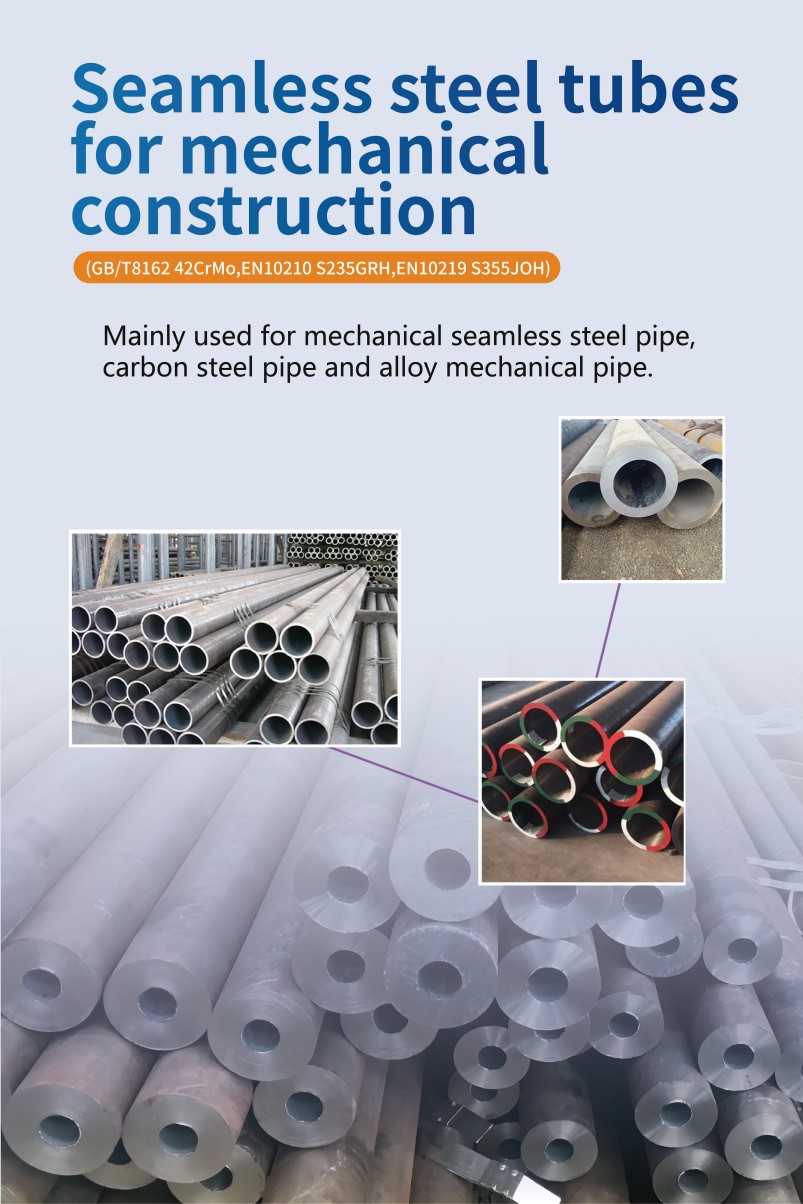
EN10210 Seamless Steel Pipes: A Comprehensive Procurement Guide for Structural Engineering. When sourcing structural hollow sections for construction, bridges, or mechanical engineering, the EN10210 standard is indispensable for most European and international projects. Understanding the nuances of this specification is crucial for procurement managers and engineers to avoid costly downtime, quality disputes, and project delays. This guide covers everything you need to know about EN10210 seamless steel pipes, from chemical composition to delivery conditions and inspection protocols.
1. What is EN10210? (The Basics)
EN10210-1 and EN10210-2 define the technical delivery conditions for hot-finished structural hollow sections made of non-alloy and fine-grain steels. Unlike EN10219 (cold-formed), EN10210 covers hot-finished products. The hot-finishing process (normalizing or normalizing rolling) relieves internal stresses, thereby improving weldability and ensuring more uniform mechanical properties across the wall thickness.
2. Key Steel Grades under the EN10210 Standard
Selecting the right steel grade is the first step toward successful procurement. The standard covers several grades, classified by yield strength and impact toughness:
S235JRH: Basic structural steel, suitable for ambient temperatures.
S275J0H / S275J2H: Higher strength, commonly used in general construction.
S355J0H / S355J2H / S355K2H: The most widely used grades for heavy-duty load-bearing structures.
E275 / E355 (Fine-grain): Offers superior low-temperature performance.
Important Purchasing Tip: Always verify the impact test temperature. "J0" indicates 0°C, "J2" indicates -20°C, and "K2" indicates -20°C but with higher energy absorption (40J vs. 27J). For projects in Northern Europe or cold-climate regions, the use of S355J2H or S355K2H is mandatory.
3. Tolerances and Dimensions (Details to Check)
Dimensional tolerances under the EN 10210 standard are stricter than those under ASTM standards. When placing an order, please note:
Outside Diameter (OD) Tolerance: Typically ±1% for hot-finished products, but always verify the specific table in the standard.
Wall Thickness Tolerance: Unlike cold-formed tubes, hot-finished tubes have a negative tolerance; this must be accounted for in engineering specifications.
Mass (Weight) Tolerance: Ensure the supplier guarantees the deviation between theoretical and actual weight (usually within ±6%).
Buyer's Tip: If you require a "positive tolerance" on wall thickness to ensure a safety margin during high-pressure hydrostatic testing, please specify this clearly.
4. Delivery Condition and Heat Treatment
The "H" in the grade designation (e.g., S355J2H) indicates heat treatment. Typically, this means:
Normalized rolling (N)
Normalized forming (N)
This heat treatment refines the grain structure. Always request a Mill Test Certificate (MTC)—Type 3.1 or 3.2 per EN 10204—to verify that the normalizing temperature and holding time meet requirements.
5. Procurement Checklist: 5 Key Points Before Signing the Purchase Order.
A. Surface Quality & Internal Defects
EN10210 mandates that the surface must be free of cracks, laps, and scale. However, minor surface imperfections are allowed if they remain within the negative tolerance.
Recommendation: Negotiate the "rejection limit" for surface defects in your contract. Insist on 100% visual inspection plus NDT (Non-Destructive Testing) for critical applications.
B. Chemical Composition & CEV (Carbon Equivalent Value)
For welding-intensive applications, the Carbon Equivalent Value (CEV) is more important than the carbon content alone.
EN10210 restricts CEV to ensure good weldability. For S355 grades, CEV usually stays ≤ 0.45.
Action: Ask the supplier to provide actual ladle analysis data, not just target values.
C. Mechanical Testing
Ensure the following tests are included in the production run:
Tensile Test (Yield strength, UTS, Elongation %)
Impact Test (Charpy V-notch at specified temperatures)
Flattening Test (to check ductility)
Hydrostatic Test (if required for pressure applications, though EN10210 is primarily structural, confirm this separately).
D. End Finishing & Protection
Beveled Ends: For welding, request API-style bevel ends (30° +/- 5°) with a land of 1.6mm.
End Caps: Always request plastic end caps to protect the threads and bore from moisture during sea freight.
E. Traceability
Every pipe must be clearly marked with the manufacturer's logo, standard (EN10210), grade, size, and heat number.
Rule of thumb: Reject any material where the paint-stencil marking is illegible; this is a red flag for poor quality control.
6. Common Pitfalls in EN10210 Sourcing
Confusing EN10210 with EN10219: They are NOT interchangeable. EN10219 (cold-formed) has higher yield strength due to cold working but lower ductility and higher residual stress.
Underestimating the Impact of Hot-Finishing: The cost of EN10210 is typically 8-15% higher than cold-formed. Do not compromise if your design requires stress-relieving after welding.
Forgetting about Length Tolerance: EN10210 offers three length categories. Specify "Exact Length" if you need zero off-cuts to save on wastage costs.
7. Environmental & Compliance Note
As of recent updates, ensure your supplier complies with REACH and RoHS regulations if shipping to the EU. Also, verify that the steelmaking process follows Sustainable Development Goals (SDG) standards—this is becoming a prerequisite for government infrastructure tenders.
adherence to the tolerances outlined in Table 3 of EN10210-2.
Need a Quick Quote for EN10210 S355J2H?
[Contact our technical sales team:info@sanonpipe.com.] for project-specific mill rolling schedules and competitive ex-mill prices.
Post time: Jul-22-2026


