
If you want to know more information, like quotation, products, solutions, etc., please contact us online.
December 2025 - Key Industry Developments and Policy Updates
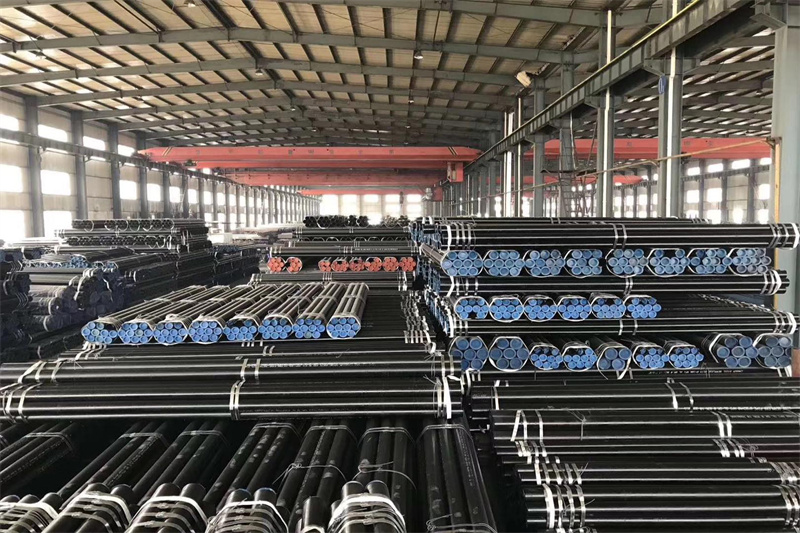
As 2025 concludes, the global seamless steel pipe market faces a significant turning point with new export license policies expected from Chinese authorities. Market analysts indicate these regulations, likely taking effect in early 2026, will require enhanced documentation for carbon steel pipe, alloy steel pipe, and stainless steel seamless pipe exports. The policy aims to standardize quality control across API 5L, ASTM A106, ASTM A335 P11/P22, and ASTM A312 TP304/TP316L product categories while addressing international trade concerns.
December Market Dynamics and Year-End Trends
Current market conditions show stabilization after November's adjustments, with seamless pipe inventories declining approximately 8.2% in major Chinese production hubs. The oil and gas pipeline sector maintains steady demand for line pipe and OCTG products, while power generation projects continue sourcing high-pressure boiler tubes and heat exchanger tubes. However, procurement managers report extended lead times of 50-65 days for large-diameter seamless pipes and specialized alloy steel pipes as mills complete existing orders before potential policy changes.
Anticipated Policy Impact on Global Supply Chains
Industry experts predict the forthcoming export license system will particularly affect these areas:
Certification Requirements: Enhanced verification for Mill Test Certificates (MTC) and material traceability documents
Compliance Standards: Strict adherence to API, ASTM, and EN 10204 3.1/3.2 specifications for seamless mechanical tubes and structural pipes
Logistics Planning: Potential documentation delays affecting container and bulk vessel scheduling for carbon steel tubes and precision steel pipes
Q1 2026 Market Forecast and Strategic Recommendations
The first quarter of 2026 presents both challenges and opportunities for steel pipe procurement:
Price Stability: Raw material costs for seamless steel pipes are projected to remain within 3-5% of current levels through March 2026
Demand Growth: Infrastructure projects in Southeast Asia and the Middle East will drive orders for welded steel pipe and corrosion-resistant alloys
Strategic Actions:
Secure ASTM A106 Grade B and API 5L X52/X60 inventories before December 25
Request updated certification protocols from suppliers of stainless steel pipes and duplex pipes
Consider forward purchasing for Q1 2026 requirements of cold-drawn seamless tubes and hydraulic cylinder tubes
Global Supply Chain Adaptations
International buyers are implementing various strategies to navigate the changing landscape:
Diversification: Sourcing seamless pipes from alternative manufacturing centers while maintaining Chinese carbon steel pipe suppliers for cost-effective standard grades
Documentation Preparation: Early collection of Origin Certificates (CO) and Quality Certificates (CQ) for oil and gas pipe shipments
Inventory Management: Building 30-45 day safety stocks of ASTM A53 Grade B and API 5CT products for critical maintenance projects
Technology and Quality Advancements
Despite policy uncertainties, manufacturing innovations continue advancing:
Automated inspection systems now achieve 99.2% defect detection in seamless steel pipes for critical applications
Improved heat treatment processes enhance performance characteristics of ASTM A335 P91 and ASTM A213 T92 alloys
Digital tracking provides complete material histories for OCTG and line pipe products
Our Solutions for Changing Market Conditions
We provide comprehensive support for steel pipe procurement amid evolving regulations:
Policy Navigation: Updated guidance on export license requirements for seamless tube and welded pipe shipments
Quality Assurance: Guaranteed compliance with international standards for carbon steel pipes, alloy steel pipes, and stainless steel pipes
Supply Chain Management: Reliable logistics planning for large-diameter pipes and structural steel tubes
Documentation Services: Complete certification packages for boiler tubes, heat exchanger tubes, and mechanical tubing
Immediate Actions for Buyers
To ensure uninterrupted supply of seamless steel pipes during the policy transition:
Schedule consultations for ASTM A106, API 5L, and ASTM A312 product requirements
Submit documentation requests early for MTC, CO, and CQ certificates
Review Q1 2026 project needs for precision pipes, transmission pipes, and corrosion-resistant pipes
Conclusion: Proactive Planning for Market Transitions
The anticipated export license implementation represents both regulatory compliance requirements and quality verification opportunities for steel pipe procurement. By establishing transparent documentation practices and strengthening supplier relationships now, international buyers can effectively manage the policy transition while securing reliable supplies of seamless steel pipes, carbon steel tubes, and specialty alloy pipes for 2026 projects.
Contact our international sales team for customized analysis of how these developments affect your specific seamless pipe, welded pipe, and tube product requirements. We provide market updates, policy interpretation, and procurement strategy development for oil and gas pipelines, power generation systems, and industrial applications.
ASTM A106 Gr.B seamless steel pipe is a high-temperature carbon steel seamless pipe in the American Society for Testing and Materials standard, which is often used for fluid transportation under high temperature and high pressure environment. The corresponding materials in China mainly refer to the Chinese national standard (GB) and industry standards, and need to be matched from three perspectives: chemical composition, mechanical properties, and usage scenarios.
There are usually two options for domestic material comparison:
The first corresponding material: 20 steel (GB/T 8163)
20 steel is an ordinary carbon structural steel, which is a common material in the GB/T8163 standard and is suitable for general fluid transportation. Chemical composition comparison: ASTM A106 Gr.B has a carbon content (C) of 0.17-0.24%, and a manganese (Mn) of 0.29-1.06%; 20 steel has a carbon content of 0.17-0.24%, and a manganese content of 0.35-0.65%. The carbon content of the two is close, but the manganese content of ASTM A106 Gr.B has a higher upper limit and better high temperature performance.
Mechanical properties comparison: ASTM A106 Gr.B has a tensile strength of >415MPa and a yield strength of >240MPa; 20 steel has a tensile strength of >410MPa and a yield strength of >245MPa. The data are similar but the applicable temperatures are different.
Usage restrictions: 20 steel is suitable for working conditions with a design temperature below 350℃ and a low pressure. If used for high temperature and high pressure (such as boiler pipes), a higher standard material must be selected.
The second corresponding material: 20G (GB 5310)
20G is a seamless steel pipe material for high-pressure boilers, which belongs to the GB 5310 standard and is suitable for high-temperature and high-pressure steam systems.
Chemical composition comparison: 20G has a carbon content of 0.17-0.24%, a manganese content of 0.35-0.65%, and a stricter control of phosphorus and sulfur content, which is more consistent with the indicators of ASTMA106 Gr.B.
Mechanical properties comparison: 20G's tensile strength is ≥410MPa, and its yield strength is >245MPa, which is almost the same as ASTM A106 Gr.B, and the allowable operating temperature is up to 450℃.
Application scenarios: 20G is commonly used in boiler pipes of thermal power plants and chemical high-pressure equipment, and can replace ASTM A106 Gr.B for the same working conditions.
Replacement precautions 1. Standard differences: ASTM A106 Gr.B requires transverse tensile test and flattening test, while GB/T 8163 only requires longitudinal tensile test. When replacing, it is necessary to confirm whether the test items meet the requirements.
2. Heat treatment requirements: ASTM A106 Gr.B is usually delivered in hot-rolled state, 20G requires normalizing treatment, and the process needs to be adjusted if replaced.
3. Certification requirements: If the export project specifies the American standard material, it is necessary to confirm with the customer whether the national standard replacement is accepted. Some projects may require additional third-party inspection.
Practical application case
A petrochemical enterprise purchased ASTM A106 Gr.B pipes for high-temperature oil transportation. Due to the long delivery cycle, it switched to 20G material. After third-party testing, the impact toughness (-20℃ KV2234J) and high-temperature strength (yield strength>180MPa at 450℃) of 20G met the design requirements, and the project was accepted.
Summary
ASTM A106 Gr.B can correspond to 20 steel (general working conditions) or 20G (high temperature and high pressure working conditions) in China. When replacing, it is necessary to combine the specific temperature, pressure and testing standards. It is recommended to give priority to 20G material, whose chemical composition and performance are closer to the US standard requirements and have a wider range of applications.
Post time: Dec-17-2025


