
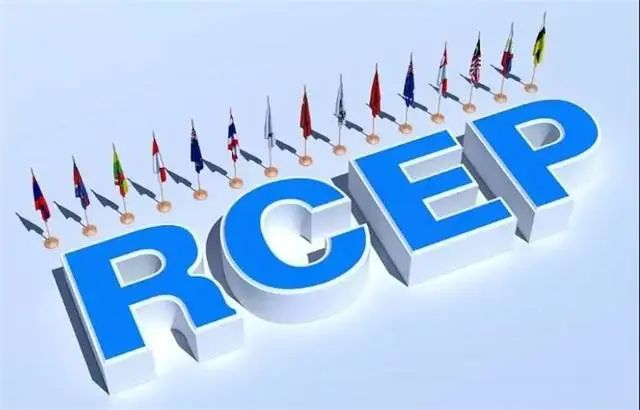
RCEP is a free trade agreement initiated by the ten ASEAN nations, with the participation of China, Japan, South Korea, Australia, and New Zealand. It officially entered into force on January 1, 2022, and became fully effective across all 15 signatory nations after taking effect in the Philippines on June 2, 2023. Covering approximately 30% of the global population and economic output, it is currently the world's largest free trade agreement.
By the fifth year of its implementation, RCEP offers multidimensional benefits to the steel pipe foreign trade industry; the core dividends lie in tariff reductions, rules of origin (cumulation), and incremental market opportunities fostered by regional integration.
Specifically regarding the steel pipe industry, the impact is evident in the following areas:
Tariff Reductions: Tangible reduction in export costs, with benefits continuing to materialize.
Tariff reductions represent the most direct and quantifiable benefit, which is particularly crucial for steel pipe exports, a sector typically characterized by low profit margins.
Taking the ASEAN market as an example: Import tariffs on steel pipes in certain ASEAN countries (such as Indonesia and Thailand) have seen significant cuts. For instance, the import tariff on spiral welded steel pipes dropped from an average of 8% to below 3%. Although the reduction timeline for some high-value-added products is longer (e.g., Thailand’s tariff on seamless pipes takes 10 years to reach zero), the overall trend is positive.
Product-specific reductions: Consider Thailand’s tariffs on seamless steel pipes for oil and gas (HS Code 730419) imported from China; the base rate is just 1%, and following RCEP's entry into force, it decreases by 0.1% annually, reaching zero by the tenth year. By lowering tariffs, RCEP directly reduces the final price of Chinese steel pipe products in member markets, thereby enhancing price competitiveness.
Rules of Origin (Cumulation): Deepening regional supply chain collaboration and flexibly leveraging policy dividends.
This is RCEP's most valuable institutional innovation, as it fundamentally lowers the threshold for qualifying for tariff preferences.
The "cumulation" effect: Under the RCEP framework, a product from one member state can incorporate raw materials from other member states, all of which are treated as "originating materials" during the qualification calculation. For instance, steel pipes processed in China using specialty steel from Japan or South Korea can still be considered to have regional origin under RCEP rules, thereby qualifying for tariff reductions. This breaks the traditional free trade agreement constraint requiring the entire production process to take place within a single country.
Practical Guide: Enterprises need to master core mechanisms such as "regional cumulation rules," "back-to-back certificates of origin," and "approved exporter declarations," and fully utilize the RCEP Form R certificate to benefit from tariff reductions.
Handling Online Verification: New regulations, such as the online verification of RCEP certificates of origin, have been implemented (with full rollout by 2026). Enterprises must ensure the authenticity, accuracy, and compliance of their declaration data to meet stricter regulatory standards.
Market Access and Demand: Tapping into the vast regional market and seizing infrastructure opportunities
The regional economic integration driven by RCEP has opened up broader markets for Chinese steel pipe enterprises, particularly in Southeast Asia, where demand is robust.
Infrastructure-Driven Demand in Southeast Asia: Large-scale projects—such as the construction of Indonesia’s new capital (with an estimated total steel consumption of 9.5 million tons), Thailand’s rail transit systems, and developments along the China-Laos Railway—continue to drive demand for steel pipes. In 2025, steel exports to ASEAN accounted for as much as 56.8% of total exports for some Chinese steel companies, making ASEAN a key growth market.
Multilateral Market Expansion: The RCEP framework also facilitates enterprise expansion into emerging infrastructure markets in the Middle East and Central Asia. By conducting deep processing in RCEP member countries (such as Thailand), Chinese enterprises can leverage rules of origin to export products (like flanges) duty-free to Japan and South Korea, thereby achieving indirect exports.
Market Diversification: The deepening implementation of RCEP helps Chinese steel pipe enterprises reduce reliance on any single market and achieve market diversification. Some enterprises have already increased their ASEAN market share to 40% by leveraging RCEP tariff preferences.
Competition and Compliance: Facing challenges and building long-term advantages
Opportunities come with challenges that enterprises must acknowledge and actively address.
Escalating Trade Friction: As the market share of Chinese steel pipes grows within the RCEP region, some countries have begun to implement trade remedy measures. For instance, Vietnam has initiated anti-dumping investigations into certain Chinese steel products, and Japan has issued a preliminary anti-dumping ruling regarding hot-dip galvanized steel strips and sheets from China.
Building compliance capabilities: In the context of RCEP, capabilities related to sustainability and compliance are emerging as new sources of competitiveness. Enterprises need to familiarize themselves with RCEP rules and market access requirements across different countries, establish robust evidentiary chains for carbon data, and transform green compliance into a core competitive advantage.
The benefits unlocked in the fifth year of RCEP’s implementation are structural in nature; the key lies in how to capture them systematically.
Proactively leveraging rules: Effectively utilize RCEP certificates of origin, optimize supply chain configurations, reduce tariff costs, and enhance price competitiveness.
Deeply cultivating growth markets: Focus on ASEAN markets with strong demand for infrastructure—such as Indonesia, Vietnam, and Thailand—and seize the opportunities arising from the synergy between the Belt and Road Initiative and RCEP.
Monitoring compliance risks: While actively expanding into new markets, closely monitor trade barriers such as anti-dumping investigations in various countries and ensure compliant business operations.
Building green competitiveness: With green trade barriers like the Carbon Border Adjustment Mechanism (CBAM) coexisting with RCEP benefits, enterprises should develop capabilities for calculating product carbon footprints and transform "green steel pipes" into a new competitive edge.
Post time: Aug-11-2026


