
If you want to know more information, like quotation, products, solutions, etc., please contact us online.
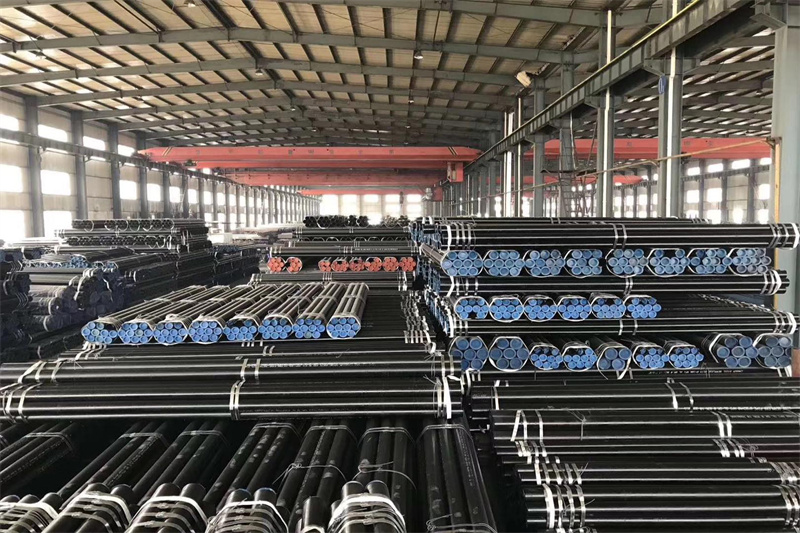
Tianjin Sanon Steel Pipe Co., Ltd. is a stockist. Our stock factory is in Cangzhou City, Hebei Province. Our main sources of goods are boiler pipes, and the representative materials are ASTM A335 P5/P11/P91/P92, ASME SA-106/SA-106M GR.B, GB/T 3087-2008 10#/20#. The representative materials of pipeline pipes are API 5L, API 5CT, the representative materials of petroleum cracking pipes GB/T 9948 are 15MoG/12CrMoVG. GB/T 6479-2013 represents the material 10#/20#, heat exchanger tubes SA179/SA210/SA192, etc., mechanical tubes GB/T 8162 represent the material 10#/20#/Q345/42CrMo, EN10210 represents the material S355JOH/S355J2H, gas cylinder tubes GB1 8248, represent the material 34CrMo4/30CrMo.
— A Complete Guide to Russian Nuclear and Supercritical Power Plant High-Temperature, High-Pressure Piping Materials
Sanonpipe – Your Trusted Supplier of Russian ТУ Standard Boiler Tubes
I. Standard System Positioning: A “Special Technical Specification” for Nuclear and Thermal Power Boiler Tubes
ТУ 3-923-75 is a dedicated technical specification (ТУ – Technical Conditions) developed by Russia for seamless steel tubes used in nuclear power plant and thermal power plant boiler systems. Unlike general national standards (ГОСТ), ТУ standards are typically tailored for specific industrial applications, imposing stricter and more targeted technical requirements.
This standard is primarily applied by major Russian heavy machinery manufacturers such as НКМЗ (Novokramatorsk Machine-Building Plant) and is one of the core material standards for high-temperature, high-pressure piping systems in Russian nuclear and thermal power sectors. Across Russia and the CIS market, this standard is widely used for nuclear power main steam pipelines, boiler superheater tubes, reheater tubes, and other critical equipment, making it an essential technical basis for pipe procurement in nuclear and thermal power generation.
Key features of the standard: ТУ 3-923-75 imposes stringent requirements on chemical composition, mechanical properties, heat treatment processes, and non-metallic inclusion control, ensuring long-term safe operation under the extreme working conditions of nuclear power plants and supercritical units.
Material composition: The standard primarily covers two core grades – 16ГС (16GS) low-alloy structural steel and 15Х1М1Ф (15Kh1M1F) low-alloy heat-resistant steel.
II. Material 16ГС (16GS) in Detail – Low-Alloy High-Strength Structural Steel
16ГС (Latin transliteration: 16GS) is a low-alloy high-strength structural steel under the Russian standard system, widely used in boiler, pressure vessel, and welded structural component manufacturing.
International equivalent grades:
| Standard System | Equivalent Grade | Remarks |
| China (GB) | Q345D (formerly 16Mn) | Low-alloy high-strength structural steel |
| General international | Low-alloy Mn-Si system structural steel | — |
Chemical composition (wt%): It is a low-carbon, high-manganese steel with carbon ≤0.20%, manganese 1.30–1.70%, and silicon 0.50–0.80%, offering excellent weldability and low-temperature toughness.
Mechanical properties:
Tensile strength: 470–640 MPa
Yield strength: 305–345 MPa (depending on thickness)
Low-temperature impact toughness: meets -40°C impact requirements
Typical applications:
Boiler piping systems in nuclear and thermal power plants
Structural components for steam boilers and pressure vessels
Welded pressure equipment and metal structures
Material characteristics: 16ГС features excellent weldability, good low-temperature toughness, and relatively high strength, making it a key material for boiler piping in nuclear and thermal power applications.
III. Material 15Х1М1Ф (15Kh1M1F) in Detail – A Benchmark Low-Alloy Heat-Resistant Steel
15Х1М1Ф (Latin transliteration: 15Kh1M1F) is a low-alloy heat-resistant steel under the Russian standard system, primarily positioned for nuclear and supercritical thermal power high-temperature, high-pressure service. This pearlitic heat-strengthened steel incorporates alloying elements such as chromium (Cr), molybdenum (Mo), and vanadium (V) to significantly enhance creep strength at elevated temperatures, oxidation resistance, and long-term service stability.
Material designation breakdown: 15 indicates carbon content of about 0.15%, Х stands for chromium (Cr), 1 for chromium content of about 1%, М for molybdenum (Mo), 1 for molybdenum content of about 1%, and Ф for vanadium (V).
International equivalent grades:
| Standard System | Equivalent Grade | Remarks |
| China (GB/T 3077) | 15Cr1Mo1V | Low-alloy heat-resistant steel, core material for domestic thermal power units |
| Germany (DIN/EN) | 15CrMoV5-9 / 1.8521 | — |
Chemical composition (wt%) – Typical requirements per ТУ 3-923-75:
| Element | Content Range | Role/Explanation |
| C (Carbon) | 0.10 – 0.16 | Balances strength and toughness |
| Si (Silicon) | 0.17 – 0.37 | Improves oxidation resistance |
| Mn (Manganese) | 0.40 – 0.70 | Enhances strength and hardenability |
| Cr (Chromium) | 1.00 – 1.40 | Forms a dense oxide film, providing corrosion and heat resistance |
| Mo (Molybdenum) | 0.90 – 1.10 | Boosts high-temperature strength and creep resistance |
| V (Vanadium) | 0.20 – 0.25 | Refines grain structure and improves thermal strength |
| Ni (Nickel) | ≤ 0.25 | Improves toughness |
| S (Sulphur) | ≤ 0.025 | — |
| P (Phosphorus) | ≤ 0.025 | — |
15Х1М1Ф is chemically very close to China’s 15Cr1Mo1V, which has been widely used in over 20 imported 300 MW and above thermal power units for main steam pipes, reheat steam pipes, and headers. Its technical maturity and engineering reliability have been fully validated.
Mechanical properties:
Tensile strength: ≥ 500 MPa
Yield strength: ≥ 320 MPa
Elongation (δ5): ≥ 18% (longitudinal) / ≥ 16% (transverse)
Impact toughness (KCU): ≥ 500 kJ/m² (longitudinal) / ≥ 400 kJ/m² (transverse)
Key performance features:
Thermal strength: The combined addition of Mo and V significantly improves creep rupture strength at elevated temperatures.
Microstructural stability: After normalising and high-temperature tempering, a stable bainite/tempered sorbite structure is obtained.
Recommended operating temperature: Capable of long-term stable service at temperatures up to +585°C.
Nuclear suitability: Suitable for nuclear power plant (AC) equipment and piping systems.
Typical application areas:
| Application | Specific Use | Service Conditions |
| Nuclear power | Main steam lines, high-pressure equipment piping | High temperature, high pressure, radiation environment |
| Thermal power | Supercritical/ultra-supercritical boiler superheater tubes, reheater tubes, main steam pipes | Temperatures ≤585°C, supercritical pressures |
| Boiler manufacturing | High-pressure boiler tubes, steam boiler piping | High steam parameters, long-term service |
| Pressure vessels | High-temperature pressure vessels | High-temperature pressure |
IV. Technical Rigour of the ТУ 3-923-75 Standard
As a dedicated standard for nuclear and thermal power boiler tubes, ТУ 3-923-75 imposes extremely strict technical requirements:
Heat treatment process: The standard specifies precise heat treatment for 15Х1М1Ф, typically normalising + high-temperature tempering, to achieve a stable bainite/tempered sorbite structure. Accurate control of the heat treatment process directly determines the microstructural stability and mechanical property retention during long-term high-temperature service.
Tight chemical composition control: Strict limits on harmful impurities such as sulphur and phosphorus ensure material cleanliness and reliability over extended high-temperature operation.
Non-destructive testing: Every tube must undergo ultrasonic testing (UT) and eddy current testing (ET) to guarantee freedom from internal defects.
V. Quality Assurance and CBAM Compliance Support
Quality assurance:
Each batch comes with a complete MTC (Mill Test Certificate)
EN 10204 3.1/3.2 certificates available upon request
Third-party inspections by SGS, BV, TÜV supported
Full traceability from heat number to finished product
EU CBAM carbon tariff compliance support:
We provide product-specific carbon emission data based on actual site measurements
Assistance in preparing monitoring plans, emission reports, and other audit documentation
Helps you avoid the EU default value penalty mechanism and reduce carbon tariff costs
VI. Why Choose Sanonpipe?
| Our Advantages | Details |
| Standard expertise | In-depth understanding of ТУ 3-923-75 and the Russian technical system, with accurate interpretation of nuclear and thermal power boiler tube requirements |
| Material assurance | Complete material certificates for 16ГС and 15Х1М1Ф, with simultaneous provision of Russian and Chinese equivalent grade documentation |
| Comprehensive size range | Available in outside diameters 10–630 mm and wall thicknesses 1–32 mm, covering mainstream requirements |
| Rapid delivery | Backed by a 20,000-tonne standing stock; emergency orders shipped within 7–15 days |
| Full-service support | From enquiry, technical clarification, and quotation to documentation and logistics – one-stop delivery |
| Zero-risk commitment | Over 240 internal quality control checkpoints and zero documentation discrepancies |
VII. Contact Us
Sanonpipe is dedicated to supplying high-quality seamless boiler tubes in compliance with ТУ 3-923-75 for the nuclear and thermal power sectors in Russia and the CIS region. Whether you need standard specifications or custom sizes, we offer professional technical support and flexible supply solutions.
Typical specification description examples:
Труба стальная бесшовная горячедеформированная 630×25 ТУ 3-923-75 / 16ГС
(Hot-rolled seamless steel tube 630×25, per ТУ 3-923-75, grade 16ГС)
Труба стальная бесшовная горячедеформированная 530×18 ТУ 3-923-75 / 15Х1М1Ф
(Hot-rolled seamless steel tube 530×18, per ТУ 3-923-75, grade 15Х1М1Ф)
Sanonpipe
+86 22 58658800
info@sanonpipe.com
www.sanonpipe.com
High Standards · Fast Delivery · Zero Risk · Low Carbon
Post time: Jul-03-2026


