
If you want to know more information, like quotation, products, solutions, etc., please contact us online.
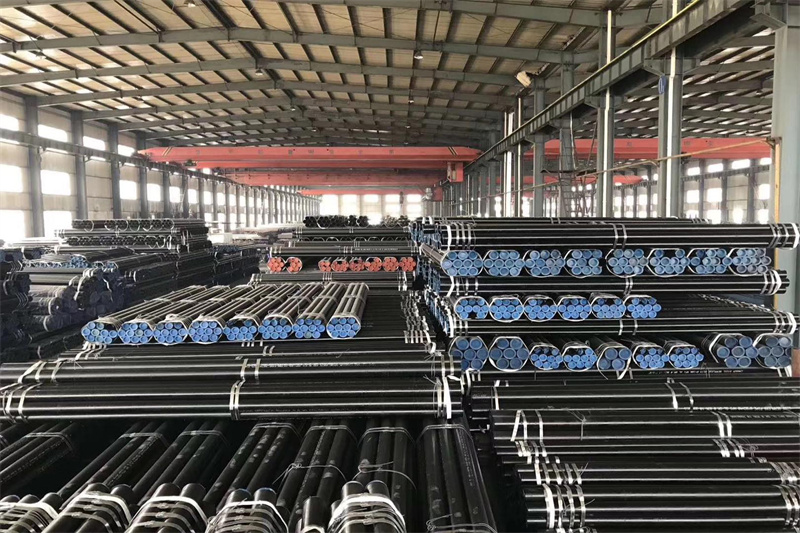
Tianjin Sanon Steel Pipe Co., Ltd. is a stockist. Our stock factory is in Cangzhou City, Hebei Province. Our main sources of goods are boiler pipes, and the representative materials are ASTM A335 P5/P11/P91/P92, ASME SA-106/SA-106M GR.B, GB/T 3087-2008 10#/20#. The representative materials of pipeline pipes are API 5L, API 5CT, the representative materials of petroleum cracking pipes GB/T 9948 are 15MoG/12CrMoVG. GB/T 6479-2013 represents the material 10#/20#, heat exchanger tubes SA179/SA210/SA192, etc., mechanical tubes GB/T 8162 represent the material 10#/20#/Q345/42CrMo, EN10210 represents the material S355JOH/S355J2H, gas cylinder tubes GB1 8248, represent the material 34CrMo4/30CrMo.
1. Introduction
ASTM A333 Gr.6 is a widely used low-temperature carbon steel pipe material, with a minimum service temperature of -45°C. Due to its excellent low-temperature toughness and cost-effectiveness, it is extensively applied in petrochemical plants, cryogenic equipment, and liquefied gas transmission systems.
In engineering procurement, A333 Gr.6 pipes are often categorized into two supply conditions: "Sour Service" and "Sweet Service" (standard/ordinary). While both types meet the basic chemical composition and mechanical property requirements of the ASTM A333 standard, they differ fundamentally in their resistance to hydrogen sulfide (H₂S) corrosion—a difference that determines their distinctly different application scenarios.
2. Core Differences Between Sour and Sweet Service
2.1 Service Conditions
Sweet Service (Non-sour) : Suitable for environments without H₂S or with extremely low H₂S partial pressure. The primary design considerations are low-temperature toughness and conventional pressure-bearing capacity.
Sour Service : Specifically designed for environments containing wet H₂S, where the material must withstand both low temperatures and H₂S corrosion simultaneously. Sour service materials are also fully acceptable for sweet service applications.
2.2 Chemical Composition Control
Although the base ASTM A333 Gr.6 specification sets limits for C, Mn, P, S, and other elements, sour service pipes require much tighter chemical control:
| Parameter | Standard A333 Gr.6 | Sour Service A333 Gr.6 |
| Sulfur (S) | ≤ 0.035% | Strictly controlled, typically ≤ 0.015% |
| Phosphorus (P) | ≤ 0.035% | Strictly controlled, typically ≤ 0.025% |
| Carbon Equivalent (CE) | Not mandatory | Tightly limited (e.g., ≤ 0.43%) to prevent excessive hardness |
By further reducing impurities such as S and P, and limiting the carbon equivalent, sour service pipes minimize susceptibility to sulfide stress corrosion cracking (SSC) from the chemical composition perspective.
2.3 Hardness and Heat Treatment Requirements
Hardness control is one of the most critical differentiators between sour and sweet service. Sour service A333 Gr.6 requires a maximum hardness of 22 HRC (Rockwell C) or 248 HBW. This is because high-hardness microstructures are highly prone to hydrogen-induced embrittlement and stress corrosion cracking in H₂S environments.
Regarding heat treatment, sour service pipes typically require Normalized or Quenched & Tempered (Q&T) processes to achieve a uniform, fine-grained microstructure that enhances SSC resistance. Standard (sweet) service pipes have relatively relaxed heat treatment requirements.
2.4 Additional Testing Requirements
Sour service pipes must undergo NACE standard compliance verification (e.g., NACE MR0175 / ISO 15156), typically including:
SSC Testing (Sulfide Stress Cracking, NACE TM0177)
HIC Testing (Hydrogen-Induced Cracking, NACE TM0284)
Standard (sweet) service pipes generally only need to meet the low-temperature impact testing requirements of ASTM A333 (-46°C, minimum average impact energy ≥ 20J) along with routine mechanical property verification.
3. Summary and Selection Recommendations
| Aspect | Standard A333 Gr.6 | Sour Service A333 Gr.6 |
| Service Medium | No H₂S or negligible H₂S | Wet H₂S-containing sour media |
| Hardness Limit | No special restriction | ≤ 22 HRC / 248 HBW |
| Heat Treatment | Conventional processing | Normalized or Q&T; uniform microstructure |
| Additional Testing | Low-temperature impact test | SSC + HIC testing per NACE standards |
| NACE Compliance | Not required | NACE MR0175 compliant |
Selection Recommendations: During the design phase, it is essential to determine whether H₂S is present in the service environment. If wet H₂S conditions exist, the procurement specification must clearly state "A333 Gr.6 for Sour Service, compliant with NACE MR0175 / ISO 15156," with explicit requirements for hardness, carbon equivalent, heat treatment, and supplementary testing. Standard A333 Gr.6 pipes should never be used in sour media, as this may lead to catastrophic stress corrosion cracking failures.
Post time: Jul-02-2026


