
If you want to know more information, like quotation, products, solutions, etc., please contact us online.
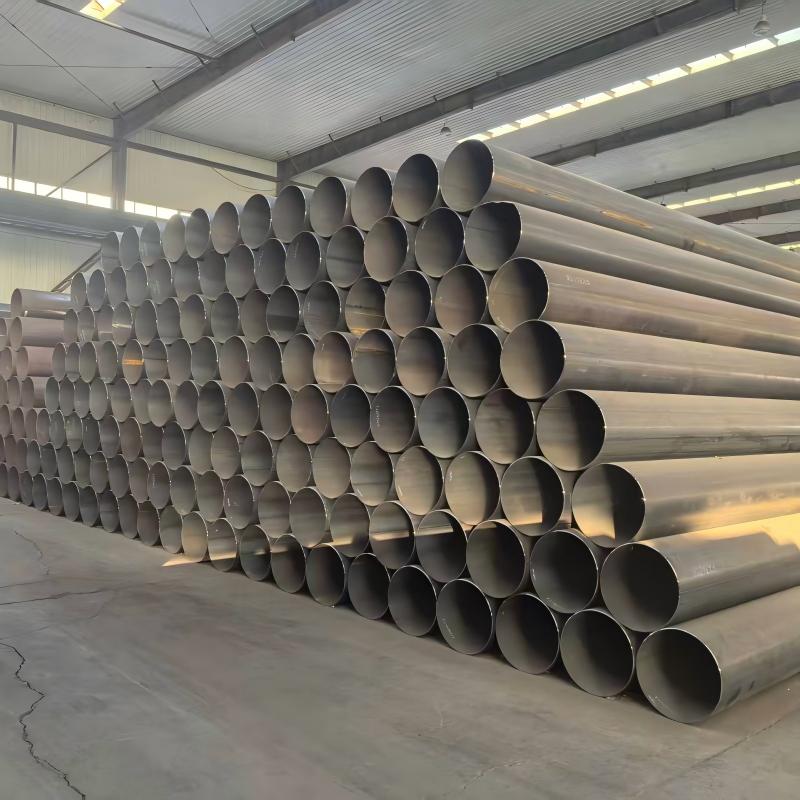
Tianjin Sanon Steel Pipe Co., Ltd. is a stockist. Our stock factory is in Cangzhou City, Hebei Province. Our main sources of goods are boiler pipes, and the representative materials are ASTM A335 P5/P11/P91/P92, ASME SA-106/SA-106M GR.B, GB/T 3087-2008 10#/20#. The representative materials of pipeline pipes are API 5L, API 5CT, the representative materials of petroleum cracking pipes GB/T 9948 are 15MoG/12CrMoVG. GB/T 6479-2013 represents the material 10#/20#, heat exchanger tubes SA179/SA210/SA192, etc., mechanical tubes GB/T 8162 represent the material 10#/20#/Q345/42CrMo, EN10210 represents the material S355JOH/S355J2H, gas cylinder tubes GB1 8248, represent the material 34CrMo4/30CrMo.
Abstract
As the European Union"s Carbon Border Adjustment Mechanism (CBAM) moves towards full implementation in 2026, the product carbon footprint has evolved from a corporate social responsibility reporting metric into a rigid compliance indicator that dictates procurement decisions and trade costs for European importers. For non-EU manufacturers aiming to retain or expand their presence in the European market, providing accurate carbon footprint data is no longer an option—it is a necessity for survival. This article analyzes the latest legislative developments in the EU and explores the critical role of carbon footprint data within the CBAM framework and its profound impact on global supply chains.
1. Introduction: When the Carbon Footprint Becomes a "Second Passport" for Customs
The entry into force of the CBAM transitional period on October 1, 2023, marked the official beginning of a "carbon-regulated" era in global trade. This mechanism is not a traditional tariff but a climate policy based on the embedded emissions of imported products.
For European importers, the importance of the carbon footprint has now risen to a core purchasing criterion alongside price and quality. As CBAM enters its definitive period on January 1, 2026, importers will be required to purchase and surrender CBAM certificates for each ton of embedded emissions in their imported goods. This means a product"s carbon footprint directly dictates the importer"s compliance costs and market competitiveness.
2. Why is Carbon Footprint So Critical for European Importers?
1. Directly Determines Import Costs and Profit Margins
The price of CBAM certificates is linked to the EU Emissions Trading System (EU ETS), currently hovering in the range of €60 to €80 per ton of CO₂. For energy-intensive sectors like steel, aluminum, and cement, this cost will significantly increase the landed price of imported goods.
If a non-EU supplier cannot provide precise actual emissions data, the EU importer is forced to use default values set by the European Commission. These values are typically based on the worst-performing 10% of facilities and are significantly inflated. Using default values forces importers to purchase more certificates, directly squeezing their profit margins. Therefore, providing accurate low-carbon data is key for non-EU suppliers to help their European customers reduce costs.
2. Mitigating Compliance Risks and Legal Penalties
Starting in 2026, CBAM declarations will be subject to third-party independent verification. Importers are responsible for the veracity of the declared data. Inaccurate or flawed carbon footprint data from suppliers will expose importers to penalties from regulatory authorities. Companies that fail to surrender sufficient certificates on time face fines of €10 to €50 per ton of unreported emissions. Consequently, European importers will inevitably favor suppliers with transparent, traceable, and verifiable carbon data management.
3. Responding to Supply Chain Traceability and Anti-Circumvention Measures
The EU has recently proposed legislative amendments to expand CBAM"s scope to include downstream products made from steel and aluminum, such as screws, bolts, wheels, machinery parts, and household appliances. This means that even when exporting finished goods, if the carbon footprint of upstream raw materials (like steel plates) is unclear, the entire supply chain"s compliance is jeopardized. Furthermore, for imports from regions deemed high-risk for circumvention, importers must provide evidence of production origin and process authenticity. Establishing a full-chain carbon traceability system—from mine to factory—has become essential to mitigate trade risks.
3. The Data Game: Default Values vs. Actual Values
CBAM offers two primary methods for calculating emissions:
Calculation (Actual Values): Based on actual consumption data (electricity, fuel, materials) from the production line.
Valuation (Default Values): Using reference data published by the EU.
The trend in EU legislation is clear: a phase-out of default values in favor of actual data. While the recent "Omnibus" simplification allows for continued default value use in some cases, relying on them means ceding control over cost optimization. Conversely, producers who use green power and improve efficiency to lower their carbon footprint can provide actual data, significantly reducing the cost of CBAM certificates for EU importers. This gives them procurement priority even when offering the same quoted price.
4. The Cascade Effect: Carbon Pressure Travels Up the Supply Chain
CBAM"s impact does not stop at the direct exporter; it permeates deep into the supply chain.
Rules for Complex Goods: For "complex goods" (products processed using upstream materials), the carbon footprint calculation must include the embedded emissions of those input materials.
Adjustments for Scrap: Recent proposals even suggest accounting for emissions from pre-consumer scrap steel and aluminum when they are used as inputs.
This means a Chinese auto parts manufacturer exporting to Europe must not only calculate its own factory emissions but also demand certified low-carbon steel data from its upstream suppliers. Manufacturers who cannot provide upstream carbon data will be excluded from high-end European supply chains.
5. The EU"s "Simplify and Deepen" Strategy: Decoding the Signals
In February 2025, the European Commission proposed simplifications through the "Omnibus" package, introducing a 50-ton-per-year de minimis threshold. This is projected to exempt 90% of importers while still covering 99% of the original emissions in scope.
This seemingly contradictory adjustment sends two clear signals:
Targeted Enforcement: The EU aims to focus its regulatory firepower on significant emitters, not to penalize SMEs. For bulk commodity exporters, compliance pressure has intensified, as regulatory resources are now more concentrated.
The Irreversibility of Carbon Pricing: Although the financial obligation to purchase certificates has been deferred to 2027, it is coming. Carbon will formally become a factor of production on corporate balance sheets.
6. Conclusion: Building Carbon Data Capabilities to Secure the European Market
The full implementation of CBAM signals the official dawn of the "Low-Carbon Competitiveness" era. For exporters targeting the EU, carbon footprint data is no longer just a line item in an annual sustainability report; it is a strategic asset essential for maintaining customer relationships and ensuring market access.
Critical actions for companies include:
Implementing Digital Carbon Management Platforms to shift from organizational carbon inventories to detailed product-level carbon accounting.
Adopting "Through Supply Chain" Traceability by mandating that upstream suppliers provide CBAM-compliant emissions data.
Seeking Third-Party Verification to provide credible data that helps European importers reduce their compliance risks, building a green, stable, and competitive supply chain together.
Companies that proactively build their carbon data capabilities will secure an unassailable first-mover advantage in the European market of the future.
Post time: Mar-04-2026


