
If you want to know more information, like quotation, products, solutions, etc., please contact us online.
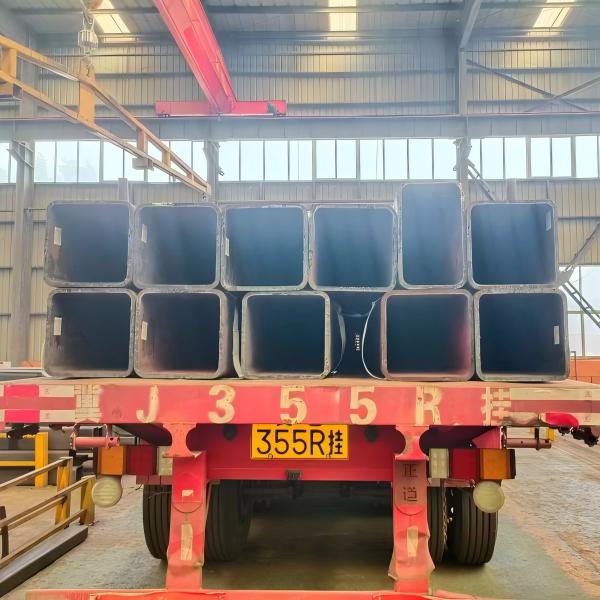
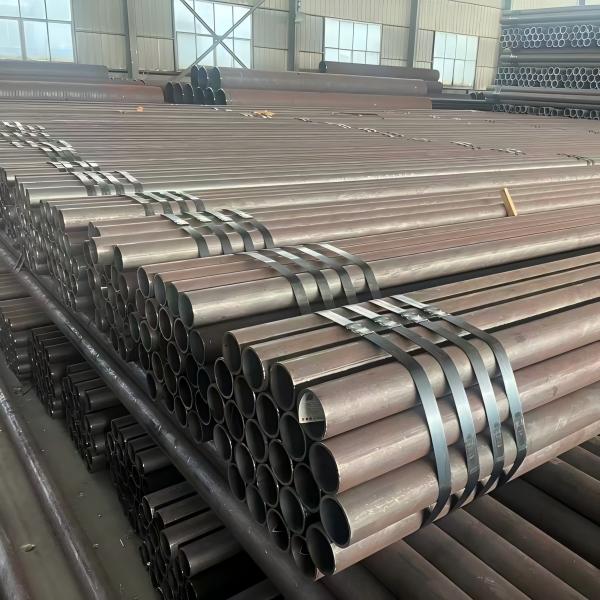
Tianjin Sanon Steel Pipe Co., Ltd. is a stockist. Our stock factory is in Cangzhou City, Hebei Province. Our main sources of goods are boiler pipes, and the representative materials are ASTM A335 P5/P11/P91/P92, ASME SA-106/SA-106M GR.B, GB/T 3087-2008 10#/20#. The representative materials of pipeline pipes are API 5L, API 5CT, the representative materials of petroleum cracking pipes GB/T 9948 are 15MoG/12CrMoVG. GB/T 6479-2013 represents the material 10#/20#, heat exchanger tubes SA179/SA210/SA192, etc., mechanical tubes GB/T 8162 represent the material 10#/20#/Q345/42CrMo, EN10210 represents the material S355JOH/S355J2H, gas cylinder tubes GB1 8248, represent the material 34CrMo4/30CrMo.
In the field of steel materials, different standard systems correspond to diverse grades and performance requirements. Q355D and EN 10297 E355N are two common high-strength low-alloy structural steels widely used in machinery manufacturing, building structures, and engineering components. While they share similarities in chemical composition and strength grade, they originate from distinct standard systems, leading to differences in technical requirements, application scopes, and performance details. This article systematically compares these two materials to help users make informed choices based on practical needs.
1. Standard Systems and Grade Meanings
Q355D: This grade belongs to the Chinese national standard (GB/T 1591-2018) for high-strength low-alloy structural steels. "Q" denotes yield strength, "355" indicates a minimum yield strength of 355 MPa, and "D" represents the quality grade, signifying impact toughness at -20°C.
EN 10297 E355N: This grade is part of the European standard (EN 10297-1:2003) for seamless steel tubes of circular or non-circular cross-sections. "E355" refers to a minimum yield strength of 355 MPa, and "N" indicates delivery in a normalized condition, ensuring uniform microstructure and properties through normalization treatment.
2. Chemical Composition Comparison
Both steels primarily consist of carbon (C), silicon (Si), and manganese (Mn), with trace alloying elements added to enhance strength and toughness. Overall, their compositional ranges are similar, but specific limits vary slightly:
Q355D: Features lower carbon content (typically ≤0.18%) and strict control of sulfur (S) and phosphorus (P) impurities to improve weldability and low-temperature toughness. Alloying elements like chromium (Cr) and nickel (Ni) are relatively low.
E355N: May have slightly higher carbon content (typically ≤0.20%) and may include small amounts of elements like copper (Cu). European standards emphasize balanced composition to ensure comprehensive properties after normalization.
3. Mechanical Properties Comparison
Both exhibit a yield strength of 355 MPa, but other properties differ:
Impact Toughness: Q355D’s grade "D" requires an impact energy of ≥34 J at -20°C, making it suitable for low-temperature environments. E355N typically does not specify low-temperature impact values, but normalization provides good ambient toughness.
Tensile Strength: Q355D generally ranges from 470-630 MPa, while E355N is usually 490-630 MPa, with a more concentrated range for the latter.
Delivery Condition: Q355D is typically delivered in hot-rolled or normalized conditions; E355N is explicitly supplied normalized, ensuring a homogeneous structure suitable for further processing.
4. Application Fields
Q355D: Widely used in building structures, bridges, vehicle manufacturing, and other applications in China and international markets, particularly for components subjected to dynamic loads in low-temperature environments.
E355N: Primarily applied in mechanical engineering and structural components under European standards, such as high-quality seamless tube products like hydraulic cylinders and bearing sleeves, emphasizing machinability and stability.
5. Selection Recommendations
Prefer Q355D when: Projects require certified low-temperature toughness; compliance with Chinese standards or GB-compatible systems is needed.
Prefer E355N when: Targeting European markets or clients requiring EN standards; components demand normalized conditions to ensure machinability.
In summary, while Q355D and EN 10297 E355N are similar in strength grade, they stem from different standard systems and emphasize distinct performance characteristics. Users should consider project standards, environmental conditions, and processing requirements when selecting between them. Consulting materials experts is advisable to ensure compliance and optimization.
Post time: Feb-06-2026


