
If you want to know more information, like quotation, products, solutions, etc., please contact us online.
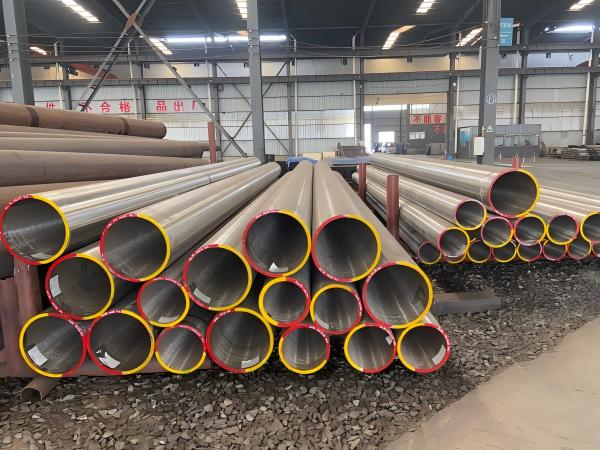
Tianjin Sanon Steel Pipe Co., Ltd. is a stockist. Our stock factory is in Cangzhou City, Hebei Province. Our main sources of goods are boiler pipes, and the representative materials are ASTM A335 P5/P11/P91/P92, ASME SA-106/SA-106M GR.B, GB/T 3087-2008 10#/20#. The representative materials of pipeline pipes are API 5L, API 5CT, the representative materials of petroleum cracking pipes GB/T 9948 are 15MoG/12CrMoVG. GB/T 6479-2013 represents the material 10#/20#, heat exchanger tubes SA179/SA210/SA192, etc., mechanical tubes GB/T 8162 represent the material 10#/20#/Q345/42CrMo, EN10210 represents the material S355JOH/S355J2H, gas cylinder tubes GB1 8248, represent the material 34CrMo4/30CrMo.
T91 and P91 are two widely used high-temperature, high-strength martensitic stainless steels derived from the 9Cr-1Mo-V alloy system. They are categorized differently due to variations in manufacturing standards and product forms, yet both play critical roles in energy and chemical industries. Below is a detailed analysis of their distinctions and applications.
1. Key Differences Between T91 and P91
• Product Form and Standards:
T91: Classified as "Tube" or "Tubing" under the ASME (American Society of Mechanical Engineers) standards. It is typically used for boiler tubes, superheater tubes, and reheater tubes.
P91: Classified as "Pipe" under ASME standards. It is primarily employed in main steam lines, large-diameter high-pressure piping, and headers.
• Manufacturing Requirements:
T91 demands higher dimensional accuracy, surface quality, and bending performance to accommodate complex boiler tube arrangements.
P91 focuses more on thick-wall pressure-bearing capacity and weldability, making it suitable for large structural components.
• Performance Emphasis:
While both alloys share similar chemical compositions, their microstructures and heat treatment processes differ slightly. T91 prioritizes high-temperature creep strength and resistance to flue gas corrosion, whereas P91 emphasizes overall toughness and long-term service stability.
2. Application Fields
• Power Generation Industry:
T91 is mainly used in high-temperature components of supercritical and ultra-supercritical power plant boilers, such as superheater and reheater tubes, capable of operating long-term at temperatures up to 620°C.
P91 is applied in main steam pipelines, headers, and high-temperature high-pressure valves, offering excellent pressure-bearing capacity for critical transmission systems in power plants.
• Petrochemical Industry:
Both alloys are utilized in high-temperature high-pressure reactors, heat exchangers, and cracking units, demonstrating resistance to corrosive environments like hydrogen sulfide.
• Other Industrial Sectors:
These include auxiliary systems in nuclear power plants and high-temperature heat treatment equipment requiring heat and pressure resistance.
3. Selection Considerations
The choice between T91 and P91 depends on specific working conditions: T91 is preferred for small-diameter, thin-walled piping requiring bending, while P91 is more suitable for large-diameter, thick-walled straight pipes or structural components. Both alloys require strict control over welding and heat treatment processes to maximize their high-temperature performance advantages.
Post time: Jan-30-2026


