
If you want to know more information, like quotation, products, solutions, etc., please contact us online.
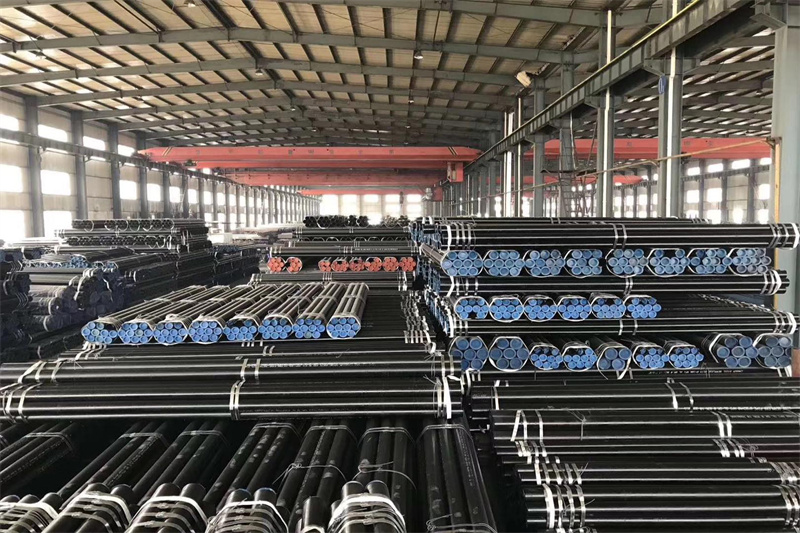
Tianjin Sanon Steel Pipe Co., Ltd. is a stockist. Our stock factory is in Cangzhou City, Hebei Province. Our main sources of goods are boiler pipes, and the representative materials are ASTM A335 P5/P11/P91/P92, ASME SA-106/SA-106M GR.B, GB/T 3087-2008 10#/20#. The representative materials of pipeline pipes are API 5L, API 5CT, the representative materials of petroleum cracking pipes GB/T 9948 are 15MoG/12CrMoVG. GB/T 6479-2013 represents the material 10#/20#, heat exchanger tubes SA179/SA210/SA192, etc., mechanical tubes GB/T 8162 represent the material 10#/20#/Q345/42CrMo, EN10210 represents the material S355JOH/S355J2H, gas cylinder tubes GB1 8248, represent the material 34CrMo4/30CrMo.
The year 2026 is being called the "first year of carbon tariffs." The EU Carbon Border Adjustment Mechanism (CBAM) has officially entered its mandatory collection phase, while China's domestic steel industry faces its first compliance year after being included in the national carbon market. The 15th Five-Year Plan explicitly requires the steel industry to implement "dual control of carbon emissions." Green and low-carbon practices have moved from being a corporate social responsibility "option" to a "must-have" for market access and core competitiveness. For the steel pipe industry, carbon footprint management capability now stands alongside product quality and delivery speed as the fourth pillar of international competition.
I. CBAM Takes Effect: Carbon Data Transforms from "Environmental Metric" to "Export Currency"
On January 1, 2026, the EU Carbon Border Adjustment Mechanism officially ended its transitional period and entered the mandatory collection phase. Six high-carbon industries, including steel, aluminum, and cement, were brought under its scope. For Chinese steel enterprises, carbon data is no longer just an environmental indicator – it has become "hard currency" for export success and a "key" that directly impacts cost competitiveness.
According to estimates, the blast furnace basic oxygen furnace long route process, which dominates China's steel production, emits approximately 2.0–2.2 tonnes of CO₂ per tonne of crude steel – significantly higher than the 0.4–0.6 tonnes per tonne from the electric arc furnace short route process commonly used in the EU. Based on the EU carbon price of approximately €88/tonne at the start of 2026, once free allowances are fully phased out by 2034, the CBAM cost for steel exports to the EU would increase by €140–€160 per tonne. If companies cannot provide a CBAM compliant product carbon footprint declaration and must use the EU default emission factors, the carbon cost per tonne of steel would rise by RMB 400–700. More alarmingly, the EU has already made clear that from 2028, some 180 steel and aluminium intensive downstream products will be included in CBAM coverage, extending the impact from basic steel products to downstream manufacturing industries.
II. Domestic Policies Intensify: Dual Carbon Control and Energy Supervision Form a "Combined Attack"
2026 is also a pivotal year for the steel industry's transition from "dual control of energy consumption" to "dual control of carbon emissions." On May 13, the Ministry of Industry and Information Technology issued a notice to organise industrial energy saving supervision for 2026, covering ferrous metals, non ferrous metals, chemicals, and other sectors. Industry insiders believe this means capacity governance in the steel industry is upgrading from administrative production curbs to institutionalised screening. Future capacity governance will be carried out across multiple dimensions, including production scale, environmental standards, energy consumption levels, and carbon costs.
Meanwhile, carbon prices in China's national carbon market continue to rise. Based on the latest carbon market price of RMB 82.56/tonne and the steel industry energy consumption limit standard of 2.3 tonnes, steel costs will increase by RMB 189/tonne. The National Development and Reform Commission has also made clear that in 2026 it will focus on steel and other sectors, pushing forward energy saving and carbon reduction retrofits. The 15th Five Year Plan explicitly requires "strengthening and optimising high quality steel production bases" and implementing "dual control of carbon emissions," driving the industry's low carbon transformation from pilot demonstrations to routine implementation.
III. Carbon Footprint Performance Grading: The EU Sets Another "Green Threshold"
On April 1, 2026, the European Commission's Joint Research Centre released a technical report titled Draft Environmental Performance Classes: Five Representative Intermediate Steel Products, which for the first time systematically proposes a carbon footprint performance grading methodology for steel products. The report sets five grades from A to E, with Grade A representing best in class performance. This framework is intended to provide a scientific basis for future EU Ecodesign for Sustainable Products Regulation delegated acts and to establish an institutional foundation for EU green public procurement and the low carbon steel market.
This means that in future, steel pipe products exported to the EU will need to meet not only traditional quality standards (such as API and CE certification) but also specific carbon footprint performance grades. Carbon footprint data is rapidly evolving from a "bonus" into a "ticket to entry."
IV. Industry Accelerates Action: From Process Innovation to Zero-Carbon Factories
Facing both internal and external green pressures, the steel and steel pipe industries are accelerating their low carbon transformation.
On the process front, Wang Guodong, an academician of the Chinese Academy of Engineering, noted that traditional seamless pipe production involves smelting continuous casting, piercing and rolling, and multiple reheating and heat treatment steps. The long, fragmented process leads to repeated waste of heat energy, resulting in high energy consumption and carbon emissions. He proposed promoting compact, integrated processes – direct piercing and rolling can efficiently link continuous casting with piercing, making use of the casting billet's residual heat and reducing intermediate reheating, thus offering significant energy saving and carbon reduction potential.
On the technology front, China's first million tonne scale near zero carbon steel production line has been fully commissioned at Baosteel Zhanjiang Iron & Steel. Using "hydrogen based shaft furnace direct reduced iron + scrap steel" as the main raw material, it is expected to reduce carbon emissions by 50%–80% compared to traditional long route processes. ISO has also published guidelines for the application of low carbon technologies in steel plants, focusing on disruptive technologies such as hydrogen based direct reduction and near zero carbon electric arc furnace steelmaking.
At the enterprise level, hot rolled seamless pipes produced on Baotou Steel's 460 and 159 production lines have successfully obtained low carbon emission steel certification from the China Iron and Steel Association, achieving carbon efficiency grade E. Tianjin Pipe, with its dual status as an environmental performance Grade A enterprise and a China Industrial Carbon Peaking "Pacesetter" enterprise, is comprehensively advancing its green transformation. Its 168 rolling mill pioneered a full oxygen combustion retrofit of the annular furnace, reducing natural gas consumption by 31.71% and cutting annual CO₂ emissions by approximately 16,600 tonnes, and has obtained Type I 3 star "Zero Carbon Factory" certification. Rooftop distributed photovoltaic installations at its plant have a total capacity of 39.77 MW, generating 40 million kWh annually and reducing carbon emissions by 36,000 tonnes per year. The traditional steel pipe industrial cluster in Daqiuzhuang, Tianjin's Jinghai District, is also accelerating its green transformation – one established galvanised steel pipe company self financed over RMB 25 million for environmental retrofits and was rated an environmental performance Grade A enterprise.
V. Green and Low-Carbon: A New Competitive Dimension for Steel Pipe Exports
Under the triple pressures of CBAM taxation, accelerating domestic carbon market development, and EU carbon footprint performance grading, green and low carbon capability has become a core competitive advantage for steel pipe exporters.
On the supply chain side, more and more international EPC projects and industrial clients are requiring suppliers to provide product carbon footprint data. The green and low carbon supply chain public service platform operated by Ouyeel Cloud Commerce has linked 16 financial institutions, launched 29 green financial products, and covered over RMB 1.6 billion in green credit. Carbon footprint management is transforming from a compliance cost into a credit asset.
On the product side, with the EU CBAM's binding requirements on steel product carbon footprints and the 15th Five Year Plan's clear requirements for industrial transformation, low carbon transition has become an essential path for sustainable development of steel pipe enterprises. Suppliers capable of disclosing carbon footprint data and assisting clients in meeting CBAM compliance requirements will gain a significant edge in international market competition.
Sanonpipe has always embraced "Green & Low Carbon" as one of its core values and actively practices sustainable development principles. The company maintains a permanent stock of 20,000 tonnes of alloy steel pipes, carbon steel pipes, seamless pipes, welded pipes, and hollow sections, covering boiler pipes (ASTM A335 P92/P91/P22/P11/P5; ASME SA106/SA179/SA192/SA210), API 5L line pipes (GR.B/X42/X52/X60), EN10210/EN10219 S355JOH/S355J2H welded pipes and hollow sections, among other product categories. The company holds core certifications including API, CE, and ISO 9001:2015, and operates a CNAS accredited laboratory with over 240 internal control checkpoints to ensure product quality.
In terms of green and low carbon, Sanonpipe provides carbon footprint data for its main products to assist clients in EU CBAM compliance reporting and ESG supply chain requirements. The company adopts indoor WMS managed warehousing to reduce rust and waste, prefers recyclable packaging, and optimises LCL consolidation to reduce unit carbon emissions, actively supporting clients in building green supply chains. At the same time, leveraging multi port shipping capabilities (Tianjin, Qingdao, Shanghai) and 7-15 day emergency order delivery, Sanonpipe is committed to providing global customers with a one stop steel pipe solution that embodies High Standards, Fast Delivery, Zero Risk, and Green & Low Carbon.
Sanonpipe
Ready Stock: 20,000 tonnes of alloy & carbon steel seamless pipes, welded pipes, and hollow sections
Core Products:
Boiler Pipes: ASTM A335 P92/P91/P22/P11/P5; ASME SA106/SA179/SA192/SA210
Seamless Line Pipes: API 5L GR.B / X42 / X52 / X60 (1/2″–24″ OD)
Welded Pipes & Hollow Sections: EN10210/EN10219 S355JOH/S355J2H, EN10217 P235TR1/P265TR1
Certifications: CE, ISO 9001:2015; CNAS accredited lab; L/C zero discrepancy support; product carbon footprint data available
Delivery: Standard 15-30 working days; urgent orders 7-15 days
+86 22 5865 8800 / +86 153 2010 0890
info@sanonpipe.com
www.sanonpipe.com
Post time: Jul-06-2026