
If you want to know more information, like quotation, products, solutions, etc., please contact us online.
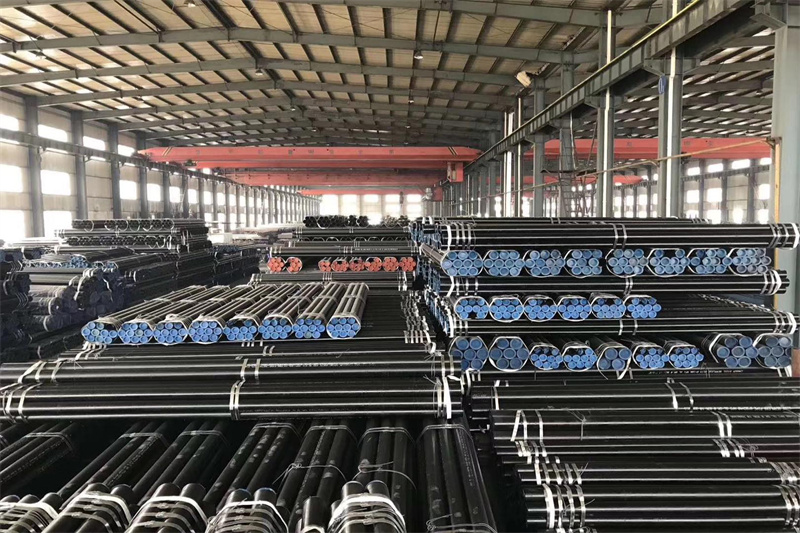
Tianjin Sanon Steel Pipe Co., Ltd. is a stockist. Our stock factory is in Cangzhou City, Hebei Province. Our main sources of goods are boiler pipes, and the representative materials are ASTM A335 P5/P11/P91/P92, ASME SA-106/SA-106M GR.B, GB/T 3087-2008 10#/20#. The representative materials of pipeline pipes are API 5L, API 5CT, the representative materials of petroleum cracking pipes GB/T 9948 are 15MoG/12CrMoVG. GB/T 6479-2013 represents the material 10#/20#, heat exchanger tubes SA179/SA210/SA192, etc., mechanical tubes GB/T 8162 represent the material 10#/20#/Q345/42CrMo, EN10210 represents the material S355JOH/S355J2H, gas cylinder tubes GB1 8248, represent the material 34CrMo4/30CrMo.
Introduction: From Energy Corridor to Conflict Zone
Since the outbreak of direct military conflict between the US-Israeli alliance and Iran in late February 2026, the Middle East has been thrown into chaos. The Strait of Hormuz, the world’s most vital oil chokepoint, has become a frontline. The export landscape for steel pipes—critical for energy and construction—has been fundamentally reshaped.
1. Iran Market: The Collapse of Local Supply vs. Reconstruction Demand
Iran, once a steel powerhouse in the Middle East, is now grappling with severe capacity loss.
Wartime Damage: Key facilities like Mobarakeh Steel in Isfahan suffered significant damage from airstrikes, disrupting the production of seamless pipes and flats. Attacks on power grids and gas stations have crippled DRI production, forcing operation rates down to an estimated 60% .
Reconstruction Needs: The post-war reconstruction phase has created an insatiable demand for long steel products (rebar, I-beams). Domestic demand surged by 40% annually, far exceeding local damaged capacity .
The Chinese Alternative: Sanctions and war have made Iranian production of high-grade seamless tubes unsustainable. Consequently, China has become the primary filler of this gap. While direct exports to Iran dropped by 83.9% YoY in March-April due to logistics issues, exports to Kuwait surged by 130%, with a significant portion destined for Iranian projects .
2. Regional Overview: The "Blockade" Effect of Hormuz
The disruption of maritime traffic through the Strait of Hormuz is the key variable affecting exports.
Plummeting Direct Exports: According to customs data, Chinese seamless pipe exports to the seven Persian Gulf states (excluding Oman) dropped by 72.2% YoY in March-April 2026, a loss of 231,400 tons .
Shift of Trade Hubs: The UAE, previously the top re-export hub (Jebel Ali), saw imports of Chinese seamless pipes crash by 91.48% in March. Trade has since pivoted to Oman (Salalah Port) and Saudi Red Sea ports to avoid the minefields .
Rising Costs: War risk insurance premiums have skyrocketed, and vessels are rerouting via the Cape of Good Hope. Despite FOB prices rising to $636/ton due to tight supply, Middle Eastern buyers remain active to secure materials for urgent energy projects .
3. The New Export Geography: Winners and Losers
The Rise of "Proxy" Exporters:
Kuwait has emerged as the new gateway. It became the largest destination for Chinese seamless pipes in the Middle East in early 2026, accounting for 24.15% of the market share .
Turkey & Egypt are acting as critical land bridges for goods destined for Europe and the Levant, bypassing the maritime chokepoint .
Energy Infrastructure as a Driver: The UAE is aggressively building the Strategic Pipeline 2 (Abu Dhabi-Fujairah) to bypass Hormuz, expected to be operational by 2027 . This is a major driver for large-diameter Line Pipe (LSAW) procurement.
4. Future Scenarios
As of May-June 2026, the region is in a fragile state of "ceasefire but not peace." Here are three scenarios for steel pipe exports:
Scenario A: Status Quo (Most Likely)
Condition: Sporadic skirmishes, Strait partially closed.
Impact: High freight costs remain. Orders will shift to Oman, Kuwait, and Saudi Arabia. Chinese exporters will benefit from supply chain restructuring.
Scenario B: De-escalation & Reopening (Optimistic)
Condition: A deal is reached (potentially July 2026), the Strait reopens.
Impact: A massive "bullwhip" effect. Iranian reconstruction demand plus Saudi/UAE megaprojects will trigger a sharp rebound in Chinese pipe exports.
Scenario C: Full Escalation (Pessimistic)
Condition: All-out regional war, Hormuz fully closed.
Impact: 80% of the direct shipping market share could be lost. Monthly exports to the Gulf might fall by 400,000 tons, shifting reliance entirely to rail (CAGR) or overland routes.
Conclusion
For Chinese steel pipe exporters, the Middle East remains a region of high risk and high reward. The immediate challenge is logistics; the mid-term opportunity is reconstruction. While the route may change, the demand for millions of tons of steel pipes to rebuild Iran and maintain Gulf energy security remains a robust reality.
Post time: Jun-03-2026


