
If you want to know more information, like quotation, products, solutions, etc., please contact us online.
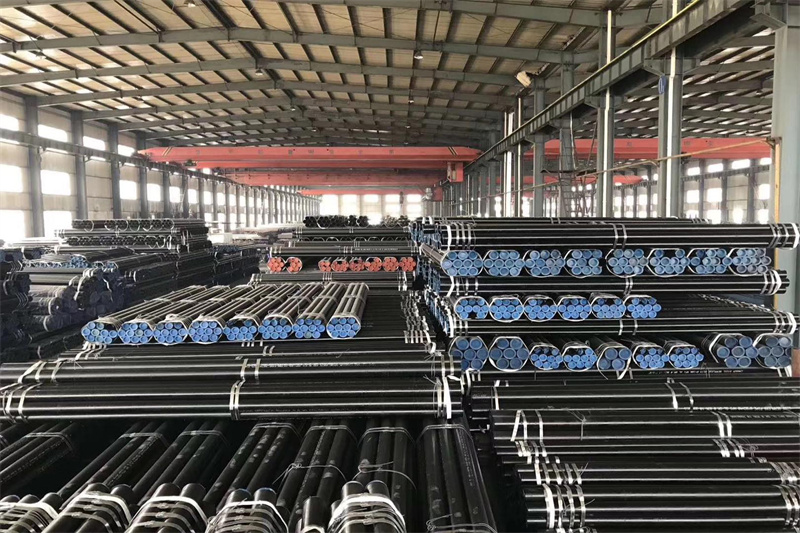
Tianjin Sanon Steel Pipe Co., Ltd. is a stockist. Our stock factory is in Cangzhou City, Hebei Province. Our main sources of goods are boiler pipes, and the representative materials are ASTM A335 P5/P11/P91/P92, ASME SA-106/SA-106M GR.B, GB/T 3087-2008 10#/20#. The representative materials of pipeline pipes are API 5L, API 5CT, the representative materials of petroleum cracking pipes GB/T 9948 are 15MoG/12CrMoVG. GB/T 6479-2013 represents the material 10#/20#, heat exchanger tubes SA179/SA210/SA192, etc., mechanical tubes GB/T 8162 represent the material 10#/20#/Q345/42CrMo, EN10210 represents the material S355JOH/S355J2H, gas cylinder tubes GB1 8248, represent the material 34CrMo4/30CrMo.
Abstract: The A106GRB hot-expanded steel pipe, as a significant industrial seamless steel pipe, plays a crucial role in pipeline systems under high-temperature and high-pressure conditions due to its unique manufacturing process and excellent comprehensive performance. This article elaborates on the production process, core technical characteristics, main application fields, and prominent advantages of the A106GRB hot-expanded pipe compared to traditional manufacturing methods, providing a reference for related engineering selection and design.
1. Core Technology: Overview of Hot Expansion Process
The hot expansion process is an extended processing technology based on seamless steel pipe production. Its core involves taking a smaller-diameter seamless steel pipe (mother pipe) manufactured by hot rolling or cold drawing, uniformly heating it to the austenitizing temperature range under precisely controlled high-temperature conditions using medium-frequency induction heating or a walking beam furnace. Subsequently, radial expansion is performed via an internal expanding mandrel (such as a conical plug) to finally obtain the desired larger-diameter steel pipe.
The key to this process lies in precise temperature control and deformation management, ensuring uniform metal flow and stable or optimized metallographic structure (typically ferrite + pearlite for Grade B steel) during expansion, thereby guaranteeing that the mechanical properties of the final product meet or exceed standard requirements.
2. Core Characteristics of A106GRB Hot-Expanded Pipe
The A106GRB hot-expanded pipe conforms to the ASTM A106 standard, where "GR.B" indicates its material grade is B. Its main characteristics are:
1. Excellent Mechanical Properties: After hot expansion and subsequent treatment, the pipe must meet the mechanical property requirements of ASTM A106 GR.B, with typical values being tensile strength ≥415 MPa and yield strength ≥240 MPa, combining good strength with certain plasticity.
2. Reliable Temperature and Pressure Resistance: Specifically designed for high-temperature and high-pressure service. It maintains high strength at elevated temperatures (e.g., up to approximately 450°C), making it suitable for conveying media such as steam and high-temperature oil/gas.
3. Good Dimensional Flexibility and Cost-Effectiveness: The hot expansion process can produce various larger-diameter finished pipes from the same mother pipe specification, breaking through the capacity limitations of large seamless pipe mills. It is particularly more economical and flexible for producing large-diameter, thick-walled pipes compared to direct hot-rolled large-diameter seamless pipes, also shortening delivery times.
4. Maintained Seamless Nature: Despite secondary processing, the finished pipe remains seamless overall, avoiding potential weak points associated with welds, resulting in good continuity.
3. Main Application Fields
Leveraging the above characteristics, A106GRB hot-expanded pipes are widely used in:
• Power Plant Boiler Systems: For high-temperature and high-pressure sections of main steam lines and reheat steam lines.
• Petrochemical Industry: High-temperature process piping in refineries, chemical plants, pyrolysis furnace piping, etc.
• Heating Systems: Main lines for high-temperature hot water transmission in district heating systems.
• Oil and Gas Transmission: Some long-distance transmission pipelines under high-temperature operating conditions.
• Other Industrial Fields: Various industrial equipment connecting pipes requiring resistance to high temperature and pressure.
4. Summary of Core Advantages
Compared to traditional longitudinal seam welded pipes or seamless pipes at extreme specifications, the advantages of A106GRB hot-expanded pipes are:
• Balances "Large Diameter" and "Seamless": Provides a reliable solution for large-diameter seamless pipes.
• Performance Compliance, Quality Control: Mature heat treatment processes ensure mechanical properties and microstructure meet or exceed standard requirements.
• High Comprehensive Cost-Effectiveness: More cost-effective and flexible in production for specific size ranges compared to full-process hot-rolled large-diameter seamless pipes of the same specification.
• High Pressure Capacity and Safety: The seamless structure avoids longitudinal welds, providing more uniformity under circumferential stress, suitable for demanding conditions.
The A106GRB hot-expanded pipe is a significant achievement in modern steel pipe manufacturing technology. It effectively fills the market demand beyond the upper limit of standard hot-rolled seamless pipe specifications while maintaining the inherent safety and reliability of seamless pipes. In the construction of key industries vital to the national economy, such as power and petrochemicals, the correct selection of A106GRB hot-expanded pipes that comply with standards is of great significance for ensuring the long-term safe, stable, and economical operation of pipeline systems. During selection, the manufacturer's process qualifications, quality control system, and product inspection reports should be strictly reviewed to ensure full compliance with ASTM A106 standard specifications.
Post time: Jan-15-2026


