
If you want to know more information, like quotation, products, solutions, etc., please contact us online.
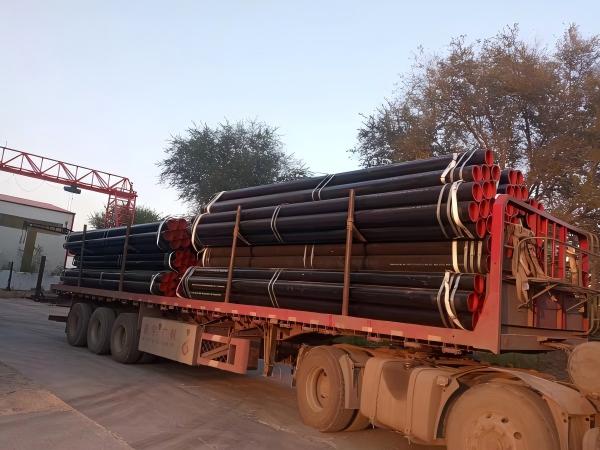
Tianjin Sanon Steel Pipe Co., Ltd. is a stockist. Our stock factory is in Cangzhou City, Hebei Province. Our main sources of goods are boiler pipes, and the representative materials are ASTM A335 P5/P11/P91/P92, ASME SA-106/SA-106M GR.B, GB/T 3087-2008 10#/20#. The representative materials of pipeline pipes are API 5L, API 5CT, the representative materials of petroleum cracking pipes GB/T 9948 are 15MoG/12CrMoVG. GB/T 6479-2013 represents the material 10#/20#, heat exchanger tubes SA179/SA210/SA192, etc., mechanical tubes GB/T 8162 represent the material 10#/20#/Q345/42CrMo, EN10210 represents the material S355JOH/S355J2H, gas cylinder tubes GB1 8248, represent the material 34CrMo4/30CrMo.
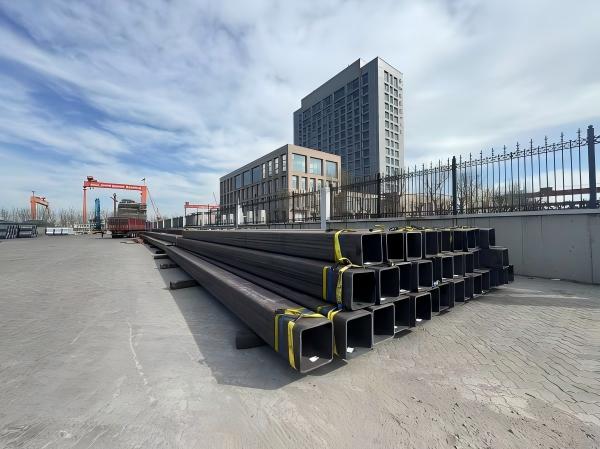
In the realm of structural engineering and construction, selecting the appropriate material is paramount for ensuring safety, longevity, and cost-effectiveness. The European standard EN10210 specifies technical delivery conditions for hot-finished structural hollow sections made of non-alloy and fine-grain structural steels. Among the most commonly specified grades are S355J0H and S355J2H. While they belong to the same family and share many characteristics, understanding their nuanced differences is crucial for optimal material selection. This article delves into the distinct properties, chemical compositions, mechanical performances, and typical applications of these two steel grades.
1. Decoding the Steel Grade Designation
The designation system itself provides the first clues to their identity and purpose. According to EN 10027-1, the names are broken down as follows:
S: Stands for "Structural Steel."
355: Indicates the minimum yield strength (in megapascals, MPa) for thicknesses up to 16 mm. This is a core similarity between the two grades .
J0 / J2: This part signifies the required impact toughness. "J0" means the material must achieve a minimum impact energy of 27 Joules at 0°C. "J2" mandates the same minimum impact energy of 27 Joules, but at a lower temperature of -20°C .
H: Denotes "Hollow Sections," specifically those that are hot-finished, as defined by the EN10210 standard .
2. Chemical Composition: Minor Variations with Significant Impact
Both S355J0H and S355J2H are manganese-containing structural steels known for their good weldability. The chemical composition requirements per EN10210 are very similar, but critical differences exist in the allowable limits for sulfur (S), phosphorus (P), and the deoxidation practice, which directly influence the steel's cleanliness and low-temperature performance .
| Chemical Element | S355J0H (Typical % max) | S355J2H (Typical % max) | Implication of Difference |
| Carbon (C) | ≤ 0.22 | ≤ 0.22 | Similar; ensures good strength and weldability . |
| Manganese (Mn) | ≤ 1.60 | ≤ 1.60 | Similar; contributes to strength . |
| Silicon (Si) | ≤ 0.55 | ≤ 0.55 | Similar; acts as a deoxidizer . |
| Phosphorus (P) | ≤ 0.035 | ≤ 0.030 | J2H has a tighter limit, reducing brittleness . |
| Sulfur (S) | ≤ 0.035 | ≤ 0.030 | J2H has a tighter limit, improving cleanliness and toughness . |
| Nitrogen (N) | ≤ 0.009 | - | J2H is typically fully-killed (fine-grain treated), negating the need for a max N value . |
The key takeaway is that S355J2H requires stricter control of impurities like phosphorus and sulfur. This results in a cleaner steel with a more uniform microstructure, which is essential for achieving reliable toughness at sub-zero temperatures. Furthermore, S355J2H is classified as a "FF" (Fully killed) steel, meaning it is treated with elements like aluminum to create a fine-grain structure, which inherently improves toughness . S355J0H is generally "FN" (Rimming steel not permitted), which is less stringent .
3. Mechanical Properties: The Defining Difference in Toughness
As the grade designation suggests, the mechanical properties, particularly yield and tensile strength, are virtually identical for both grades. The defining differentiator is their performance under impact loading at different temperatures.
| Mechanical Property | S355J0H | S355J2H |
| Yield Strength (ReH) | ≥ 355 MPa (t ≤ 16mm) | ≥ 355 MPa (t ≤ 16mm) |
| Tensile Strength (Rm) | 470 - 630 MPa (t ≤ 3mm) | 470 - 630 MPa (t ≤ 3mm) |
| Elongation (A) | ≥ 22% (longitudinal) | ≥ 22% (longitudinal) |
| Impact Energy (KV) | ≥ 27 J @ 0°C | ≥ 27 J @ -20°C |
This difference in impact test temperature is the single most important factor in choosing between the two. While S355J0H is tough enough for most indoor and temperate outdoor applications, S355J2H is engineered to resist brittle fracture in colder environments .
4. Applications and Selection Criteria
The choice between S355J0H and S355J2H is largely dictated by the lowest service temperature of the structure and the criticality of the application.
S355J0H: The Cost-Effective Choice for Temperate Climates
Typical Applications: General building construction, stadiums, platforms, and mechanical components in regions with mild or temperate climates where temperatures rarely, if ever, drop below 0°C .
Advantage: It provides excellent strength and weldability at a generally lower cost point than its J2 counterpart, making it an economical choice for projects where low-temperature impact is not a primary concern .
S355J2H: The Safety Choice for Demanding and Cold Environments
Typical Applications: Offshore structures, bridges in mountainous or northern regions, cold storage facilities, wind towers, and any structural element subject to dynamic loading in low-temperature conditions .
Advantage: Its guaranteed impact performance at -20°C provides a critical safety margin against catastrophic brittle fracture in cold climates. The finer grain structure also contributes slightly to improved weldability and through-thickness properties .
Conclusion
In summary, both EN10210 S355J0H and S355J2H are high-quality, hot-finished structural hollow section steels offering a minimum yield strength of 355 MPa. They share a similar chemical basis and identical tensile and yield strength requirements. However, they are not interchangeable in all situations. S355J2H distinguishes itself through stricter control of impurities (P & S) and a fully-killed, fine-grain structure, which guarantees a minimum impact toughness of 27 Joules at -20°C, compared to S355J0H's 27 Joules at 0°C. For projects in cold climates or those requiring a higher safety margin against brittle fracture, S355J2H is the necessary, though slightly more expensive, choice. For general applications in temperate zones, S355J0H remains a highly reliable and cost-effective option.
Post time: Feb-28-2026


