
If you want to know more information, like quotation, products, solutions, etc., please contact us online.
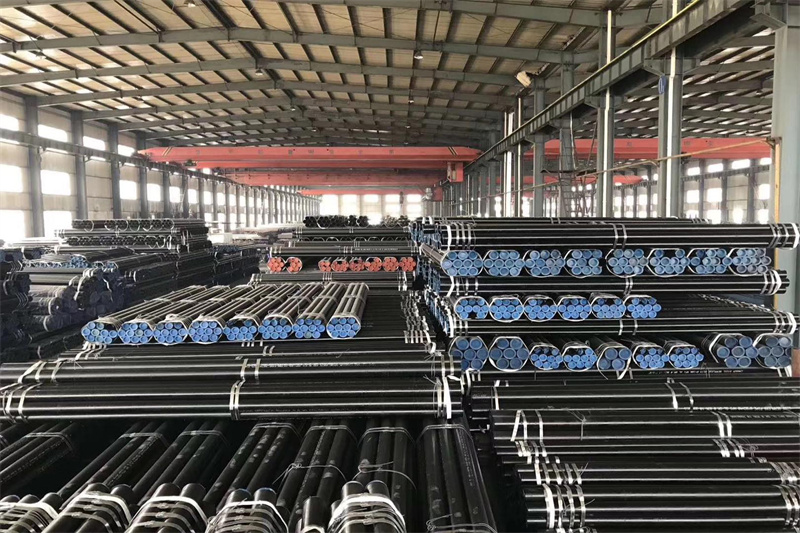
Tianjin Sanon Steel Pipe Co., Ltd. is a stockist. Our stock factory is in Cangzhou City, Hebei Province. Our main sources of goods are boiler pipes, and the representative materials are ASTM A335 P5/P11/P91/P92, ASME SA-106/SA-106M GR.B, GB/T 3087-2008 10#/20#. The representative materials of pipeline pipes are API 5L, API 5CT, the representative materials of petroleum cracking pipes GB/T 9948 are 15MoG/12CrMoVG. GB/T 6479-2013 represents the material 10#/20#, heat exchanger tubes SA179/SA210/SA192, etc., mechanical tubes GB/T 8162 represent the material 10#/20#/Q345/42CrMo, EN10210 represents the material S355JOH/S355J2H, gas cylinder tubes GB1 8248, represent the material 34CrMo4/30CrMo.
—Sanonpipe, helping you seize the opportunity amid industry change
I. Industry Status: Structural Contradictions Behind the World’s Largest Production Capacity
Seamless structural steel pipes are irreplaceable core materials in energy development, machinery manufacturing, marine engineering, infrastructure construction, and other key sectors. Today, China has built the world’s largest seamless pipe industrial system. In 2025, the global market size for seamless structural steel pipes is approximately RMB 495.24 billion, and is expected to approach RMB 669.61 billion by 2032.
However, behind this enormous scale lie increasingly acute structural contradictions. Severe overcapacity has become the industry’s most prominent issue. Since 2022, new and planned seamless pipe capacity in China has exceeded 10 million tonnes, and by 2026 total capacity is projected to reach 44.41 million tonnes. At the same time, the industry’s capacity utilisation rate has long lingered between 65% and 70%, with supply persistently outstripping demand. Over the past decade, China’s annual seamless pipe output has stabilised at around 30 million tonnes, while apparent consumption remains at about 25 million tonnes.
Homogeneous competition has intensified. Newly installed production lines are highly similar in specification, with overlapping product ranges, and a large number of small and medium‑sized enterprises remain concentrated in low‑end construction tubing. Industry‑wide profitability has fallen to its lowest level in three years, with some re‑rolling mills posting average annual losses of RMB ‑42/tonne. Industry forecasts suggest that about 30% of existing small and medium seamless pipe capacity will gradually exit due to the prohibitive cost of low‑carbon retrofitting.
In the first half of 2026, the domestic seamless pipe industry formally entered a new stage of high‑quality development characterised by a weak overall supply‑demand balance and strong structural divergence. The market’s core logic has been completely restructured, driven by multiple forces: supply‑demand mismatch, product tiering, and divergent domestic versus overseas demand. The polarisation trend is becoming increasingly evident—demand for high‑end, customised products continues to rise, while low‑end commoditised products are trapped in a red‑ocean price war.
II. Core Challenges: Multiple Pressures Mount, Traditional Models Are No Longer Viable
1. Export headwinds: the “volume growth, price decline” trap
From January to April 2026, China exported 2,417,600 tonnes of seamless pipes, down 1.75% year‑on‑year—reversing the modest growth seen earlier in the year. Exports for the full year 2026 are expected to be in the range of 5.6‑5.8 million tonnes, slightly lower than 2025. Meanwhile, seamless pipe products have been fully brought under export licence control. Relying solely on exports to absorb overcapacity is no longer realistic.
2. CBAM carbon tariffs take effect, compliance costs surge
On 1 January 2026, the EU Carbon Border Adjustment Mechanism (CBAM) officially ended its three‑year transition period and entered the full levy phase. All CBAM‑covered products exported to the EU now incur actual carbon costs per tonne of embedded emissions. In December 2025, the EU further proposed expanding the scope to include 180 steel‑ and aluminium‑intensive downstream products from 2028. In 2026, the steel industry has already incorporated green and low‑carbon indicators into mandatory performance assessments. Companies that cannot provide verified emissions data will face default values based on the average of the top 10 highest‑emitting countries worldwide—potentially imposing carbon tariff costs of €70‑80/tonne.
3. Accelerated industry shake‑out, widening polarisation
Overcapacity is becoming a driver of transformation, and export obstacles are acting as a catalyst for upgrading. Industry experts explicitly advise that SMEs should avoid competition in generic pipe products and instead focus on niche segments such as ultra‑thin‑wall, ultra‑thick‑wall, and special‑performance pipes—competing not on scale but on precision and technology. Scarce resources are increasingly concentrating in leading companies with strong financial, technical, and channel advantages. The industry must stay firmly on track with the core tasks of “curbing capacity, developing new products, improving quality, and reducing costs,” shifting from scale‑driven expansion to value creation.
III. Sanonpipe’s Response: Protecting Your Business Through Industry Transformation
Facing these profound industry adjustments, Sanonpipe has already evolved from a traditional trader to a total steel pipe supply chain solution partner. We deeply understand that what our clients truly need is not just steel pipes, but the certainty of project completion—reliable quality, guaranteed delivery, impeccable documentation, and full compliance.
1. Ready stock, faster delivery—solving “delivery anxiety”
While the industry grapples with overcapacity and fluctuating lead times, Sanonpipe maintains a standing inventory of 20,000 tonnes as our core competitive advantage, enabling emergency orders to ship within 7‑15 days—far below the industry average of 45‑60 days. No matter how tight your project schedule, we can secure the stock you need and keep your project on track.
2. CBAM compliance ready—mitigating “carbon tariff risk”
With CBAM now fully in force, “green and low‑carbon” is no longer a slogan but a core competitive factor determining whether you can continue exporting to Europe. Sanonpipe has partnered with TÜV Nord to take the lead in assisting mills with CBAM‑ready preparations:
Measured data support: We can provide site‑measured product carbon emission data, helping you avoid default‑value penalties.
Full traceability: Complete emission reports from raw material arrival to finished product dispatch.
One‑stop compliance services: Assistance in preparing monitoring plans, emission reports, data sampling, and other key audit materials.
Choosing Sanonpipe means you get not only quality steel pipes but also a green passport to the European market.
3. Focus on high‑end categories—avoiding the “price red ocean”
While low‑end pipes are mired in price wars, Sanonpipe adheres to a focused product strategy—specialising exclusively in seamless line pipe (API 5L series) and alloy boiler tubes (ASTM A335 series) . We do not pursue breadth, but depth. This “one‑meter‑wide, ten‑thousand‑meter‑deep” concentration allows us to build genuine expertise in our vertical niches.
4. Zero‑risk delivery system—giving you peace of mind
We have established 240+ internal control checkpoints, covering contract review, L/C scrutiny, and documentation preparation, ensuring zero discrepancies in documents and zero delivery risk. Our 16‑touchpoint SOP covers the entire customer journey—from search results to repeat purchase invitations—so that every step is standardised and predictable.
5. Green and low‑carbon—more than compliance, it’s a competitive edge
We can provide carbon footprint reports for our main products, helping you meet ESG compliance requirements. We turn green capability into a priceable competitive advantage, so your procurement not only meets today’s needs but also aligns with future sustainability goals.
IV. Why Choose Sanonpipe?
| Customer Challenge | Sanonpipe Solution |
|---|---|
| Uncertain delivery, fear of project delays | 20,000 tonnes in stock, 7‑15 day delivery, guaranteed lead time |
| High CBAM carbon tariff costs | Partnered with TÜV Nord to provide measured carbon data, avoiding default penalties |
| Too many suppliers, high management costs | One‑stop full‑service from inquiry to delivery, hassle‑free |
| Low‑end homogeneity, price wars | Focus on high‑end line pipe + boiler tubes, quality‑driven value competition |
| Document errors causing customs clearance issues | 240+ internal checkpoints, zero document discrepancies |
V. Industry Outlook & Our Commitment
As the 15th Five‑Year Plan unfolds, the seamless steel pipe industry will continue its deep transformation towards high‑end, intelligent, and green development. Demand for high‑quality, high‑performance seamless pipes remains strong in key sectors such as energy equipment, oil and gas transmission, nuclear power, and defence. The industry shake‑out is the best time for quality suppliers to stand out.
Sanonpipe is committed to four core values—high standards, fast delivery, zero risk, and green low‑carbon—making us your most reliable supply chain partner during this industry transformation. We are not just a supplier of steel pipes; we are the guarantor of your project’s smooth progress and your compliance navigator in the carbon‑tariff era.
Partner with Sanonpipe to confidently navigate industry change and seize the opportunities of high‑quality development.
Sanonpipe
+86 22 58658800/+86 15320100890
info@sanonpipe.com
www.sanonpipe.com
High Standards · Fast Delivery · Zero Risk · Green & Low‑Carbon
Post time: Jul-13-2026


