
If you want to know more information, like quotation, products, solutions, etc., please contact us online.
Tianjin Sanon Steel Pipe Co., Ltd. is a stockist. Our stock factory is in Cangzhou City, Hebei Province. Our main sources of goods are boiler pipes, and the representative materials are ASTM A335 P5/P11/P91/P92, ASME SA-106/SA-106M GR.B, GB/T 3087-2008 10#/20#. The representative materials of pipeline pipes are API 5L, API 5CT, the representative materials of petroleum cracking pipes GB/T 9948 are 15MoG/12CrMoVG. GB/T 6479-2013 represents the material 10#/20#, heat exchanger tubes SA179/SA210/SA192, etc., mechanical tubes GB/T 8162 represent the material 10#/20#/Q345/42CrMo, EN10210 represents the material S355JOH/S355J2H, gas cylinder tubes GB1 8248, represent the material 34CrMo4/30CrMo.
Abstract: With the rapid growth of industrialization and energy demand in India, the need for high-performance alloy pipes has surged. A335 P91, an advanced chromium-molybdenum alloy steel, has become a critical material in key sectors such as power generation, petrochemicals, and nuclear energy due to its exceptional high-temperature strength, creep resistance, and corrosion resistance. This article provides an in-depth analysis of the application status, driving factors, and future trends of A335 P91 alloy pipes in the Indian market.
1. Core Material: Introduction to A335 P91 Alloy Pipe
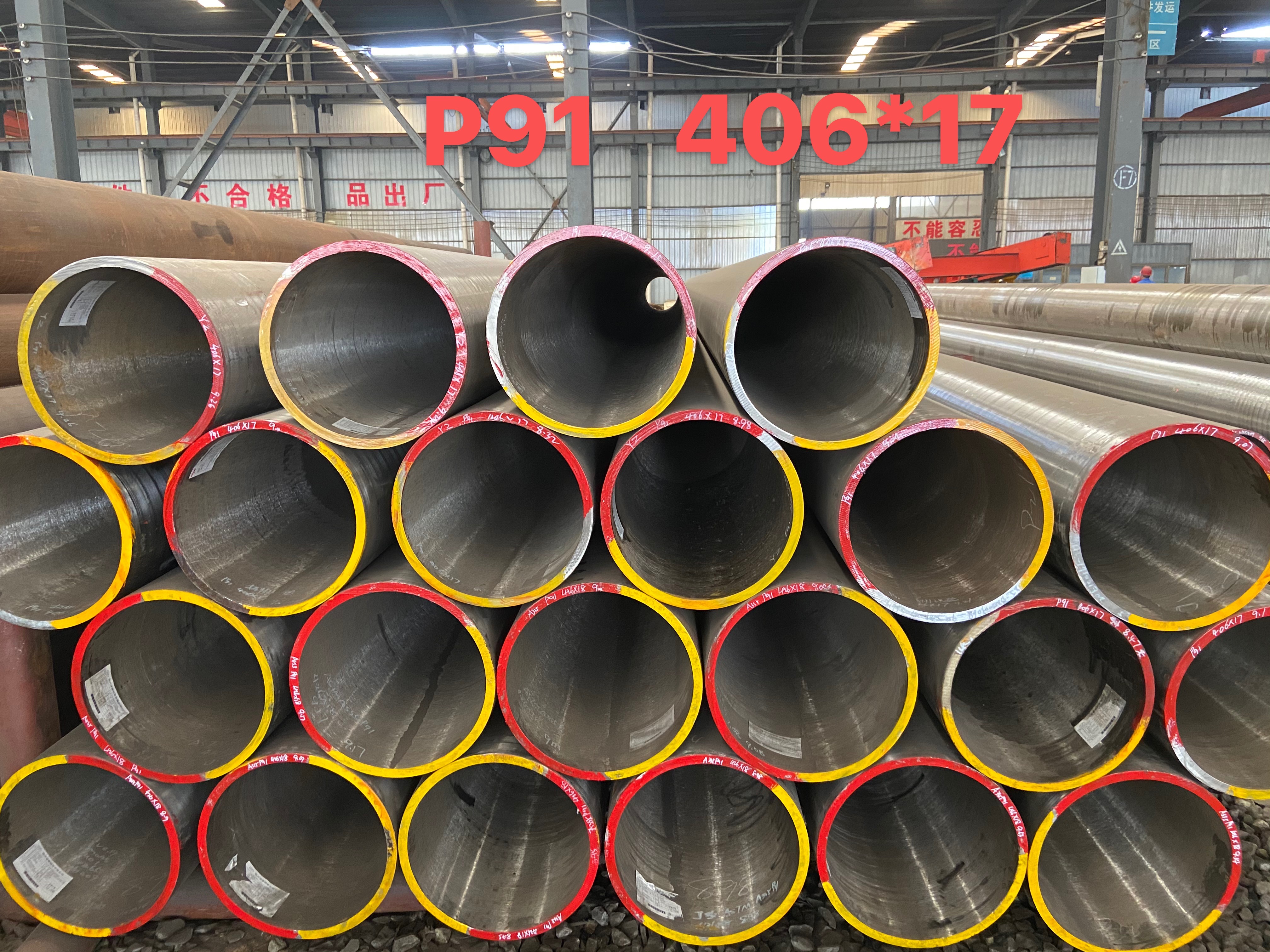
A335 P91 is a ferritic alloy steel pipe conforming to the ASTM A335 standard. Its core chemical composition is 9% Chromium and 1% Molybdenum, with micro-additions of Vanadium, Niobium, and Nitrogen (hence the name P91). Through a normalizing and tempering heat treatment process, it achieves a unique microstructure that delivers unparalleled mechanical properties under high-temperature (up to 600°C and above) and high-pressure conditions. Compared to traditional alloy steel pipes like P22 or P11, P91 allows for thinner walls at the same design pressure, reducing equipment weight, saving material costs, and improving thermal efficiency.
Keywords: Alloy Pipe, A335 P91, Chrome-Moly Steel, High-Temperature Pipe, Seamless Pipe, Power Piping, ASTM A335
2. Key Application Sectors in the Indian Market
Thermal Power Plants: This is the largest and most significant application for P91 alloy pipes in India. As India pushes for the construction of supercritical and ultra-supercritical power units to enhance efficiency and reduce emissions, P91 material has become the preferred choice for main steam lines and reheat hot-stage piping. Its ability to withstand high-parameter steam (typically pressure >22MPa, temperature >560°C) is crucial for the safe and efficient operation of power plants.
Petrochemical Industry: In refineries and chemical plants, P91 piping is used in critical units such as Fluid Catalytic Cracking (FCC) and Hydroprocessing units, handling high-temperature, high-pressure, and corrosive fluids and hydrocarbons.
Nuclear Power Sector: P91 alloy steel pipes find applications in certain auxiliary systems of nuclear power plants, such as high-temperature heating systems, albeit under extremely stringent requirements.
Other Industrial Sectors: Includes boiler manufacturing, industrial furnace tubing, and various process piping systems requiring high temperature and pressure resistance.
3. Market Drivers and Challenges
Drivers:
Energy Demand: India's rapidly growing economy creates a massive power deficit, driving investments in new, efficient power plants.
Efficiency Upgrade: Supercritical technology is a focal point for India's power sector development, directly creating demand for advanced alloy pipes like P91.
Infrastructure Investment: Continued government investment in industrial and energy infrastructure provides long-term momentum for the market.
Local Manufacturing: The "Make in India" initiative encourages domestic pipe manufacturers to enhance technical capabilities to produce high-quality seamless pipes, reducing import dependency.
Challenges:
High Cost: The complex raw materials and manufacturing processes of P91 alloy pipes result in a price significantly higher than ordinary carbon steel pipes.
Stringent Welding Requirements: Welding P91 pipes requires strict preheating, interpass temperature control, and Post Weld Heat Treatment (PWHT). It demands highly skilled technicians, as improper procedures can lead to failures.
Import Dependency: Although local capacity is increasing, some of the highest-specification P91 pipes still rely on imports from Europe, China, etc.
Quality Variance: Inconsistent product quality in the market makes ensuring compliance with chemical composition, mechanical properties, and heat treatment status standards a critical factor for project safety.
4. Future Outlook
In the coming years, as India continues to enhance its power generation capacity and industrial base, the demand for high-performance alloy pipes like A335 P91 is expected to maintain steady growth. Market trends will lean towards higher-quality, reliable localized products. Simultaneously, a larger supporting market for the entire lifecycle management of piping, including welding services and inspection, will emerge. Manufacturers capable of supplying high-quality P91 products that meet international standards (e.g., ASTM, ASME) will be well-positioned in this dynamic Indian market.
Post time: Sep-11-2025


