
If you want to know more information, like quotation, products, solutions, etc., please contact us online.
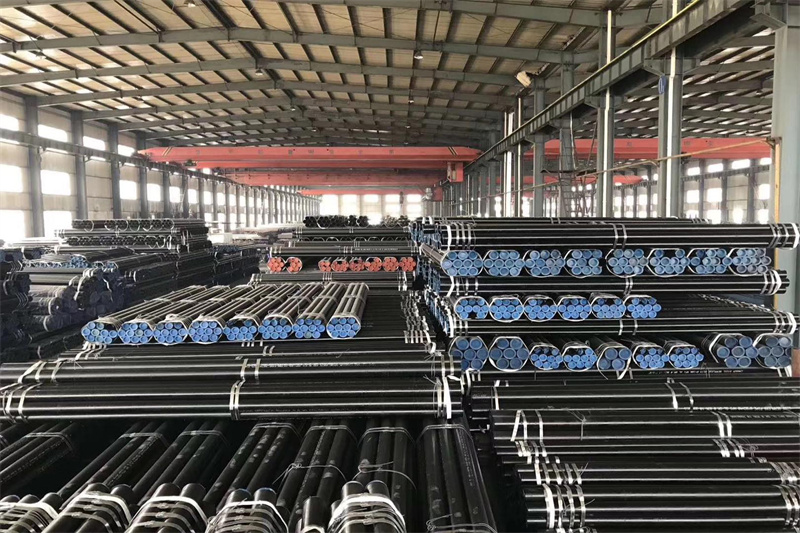
Tianjin Sanon Steel Pipe Co., Ltd. is a stockist. Our stock factory is in Cangzhou City, Hebei Province. Our main sources of goods are boiler pipes, and the representative materials are ASTM A335 P5/P11/P91/P92, ASME SA-106/SA-106M GR.B, GB/T 3087-2008 10#/20#. The representative materials of pipeline pipes are API 5L, API 5CT, the representative materials of petroleum cracking pipes GB/T 9948 are 15MoG/12CrMoVG. GB/T 6479-2013 represents the material 10#/20#, heat exchanger tubes SA179/SA210/SA192, etc., mechanical tubes GB/T 8162 represent the material 10#/20#/Q345/42CrMo, EN10210 represents the material S355JOH/S355J2H, gas cylinder tubes GB1 8248, represent the material 34CrMo4/30CrMo.
1. Standard Overview
NACE MR0175/ISO 15156 is the globally recognized standard for the selection of metallic materials for use in H₂S-containing (sour) oil and gas production environments. Jointly published by NACE International (now AMPP) and the International Organization for Standardization (ISO), the current effective revision is ANSI/NACE MR0175-2021/ISO 15156:2020.
The establishment of this standard stems from the industry's push into deeper formations and more remote offshore resources. As development of sour oil and gas fields increases, corrosion caused by hydrogen sulfide has become increasingly critical—particularly sulfide stress cracking (SSC), which can cause brittle failure in high-strength carbon and low-alloy steels, leading to catastrophic incidents.
2. Standard Structure and Scope
The standard is divided into three parts, combined into a single PDF file, and includes multiple Technical Circulars published in 2021 and 2022:
| Part | Scope | Key Content |
| Part 1 | General Principles | Defines sour environment, basic material selection principles, qualification methods |
| Part 2 | Carbon & Low-Alloy Steels | Hardness limits (≤22 HRC), welding requirements, chemistry control |
| Part 3 | CRAs & Other Alloys | Environmental limits per alloy family (temperature, pH₂S, chloride concentration) |
The standard applies to equipment used in oil and gas production and natural gas sweetening plants where failure could pose risks to public and personnel health and safety or to the environment. It addresses all cracking mechanisms caused by H₂S, including SSC, SCC, HIC, SWC, and others.
3. Definition of Sour Environment
According to the standard, when the H₂S partial pressure in the gas phase exceeds 0.3 kPa (0.05 psia), the environment is classified as sour, requiring material selection per the standard's requirements.
Applicable equipment includes wellheads, Christmas trees, piping systems, separators, flowlines in upstream production facilities, and pipeline systems transporting sour hydrocarbons.
4. Key Material Requirements
Carbon and Low-Alloy Steels (Part 2)
Base metal, weld metal, and HAZ hardness must not exceed 22 HRC (248 HV10)
Post-weld heat treatment (PWHT) is mandatory
Strict chemistry control required
Corrosion-Resistant Alloys (Part 3)
Commonly qualified materials include: 316 SS, 6-moly alloys, 2507 duplex SS, Alloy 825, Alloy 625, Alloy C-276, and Alloy 400. Each has specific environmental limits for temperature, H₂S partial pressure, and chloride concentration.
5. Key Updates and Future Outlook
The 2021/2020 edition has remained structurally consistent with the 2003 edition, with incremental revisions through Technical Circulars. In 2018, the governing committees agreed that a major rewrite was necessary to address ease of use and incorporate industry advancements.
A completely rewritten version is currently undergoing ISO balloting and publication, restructured into three new parts:
Part 1: Material and processing requirements
Part 2: Service environment assessment and material selection
Part 3: Verification, qualification, and balloting requirements
The new version provides significantly more detail on H₂S testing procedures, including guidance on sampling, test method selection, and the extent of testing required for product qualification.
6. Practical Significance
NACE MR0175/ISO 15156 serves as the fundamental basis for material selection in sour oil and gas field development. The standard emphasizes that no stainless steel is completely immune to chloride-induced stress corrosion cracking—thorough understanding of alloy limitations is essential for material selection in demanding sour environments. Equipment particularly susceptible to corrosion, such as valves, fittings, and instrumentation, requires strict compliance with the standard. All sour service materials must maintain full traceability, with mill test certificates confirming hardness testing, chemical compliance, and heat treatment condition.
In sour oil and gas field environments, material selection primarily follows the NACE MR0175 / ISO 15156 standard. This standard is the "golden rule" for ensuring the safe operation of equipment in hydrogen sulfide (H₂S)‑containing environments. It covers all pressure‑containing equipment and components, from wellhead facilities to downstream processing units.
Wellhead and downhole equipment: wellhead equipment, tubing and casing strings (production tubing, casing).
Piping and connecting components: line pipe used for long‑distance oil and gas transmission, for example, API 5L grade X65 line pipe, etc.
Surface processing and transfer equipment: pressure vessels, separators – pressure‑containing equipment used for oil/gas separation and processing.
In addition to the above products, the standard also covers various material types, including carbon steel, low‑alloy steel, stainless steel, and nickel‑based alloys.
Post time: Jun-25-2026


