
If you want to know more information, like quotation, products, solutions, etc., please contact us online.
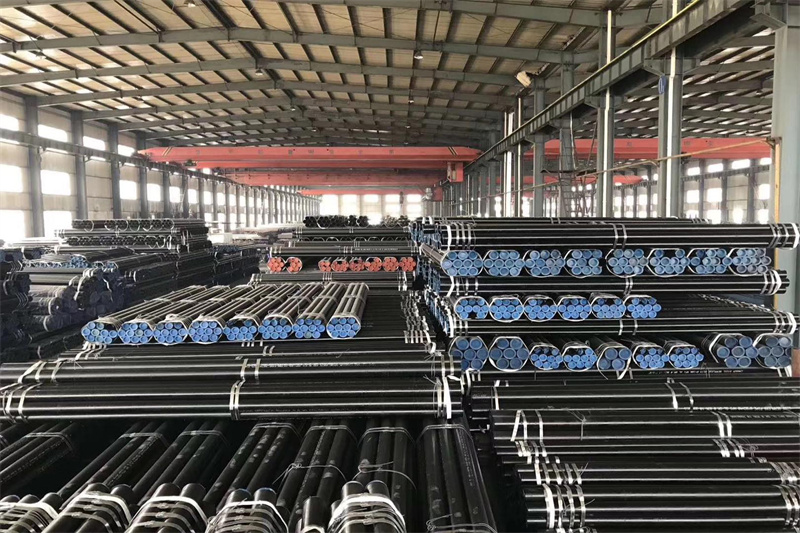
Tianjin Sanon Steel Pipe Co., Ltd. is a stockist. Our stock factory is in Cangzhou City, Hebei Province. Our main sources of goods are boiler pipes, and the representative materials are ASTM A335 P5/P11/P91/P92, ASME SA-106/SA-106M GR.B, GB/T 3087-2008 10#/20#. The representative materials of pipeline pipes are API 5L, API 5CT, the representative materials of petroleum cracking pipes GB/T 9948 are 15MoG/12CrMoVG. GB/T 6479-2013 represents the material 10#/20#, heat exchanger tubes SA179/SA210/SA192, etc., mechanical tubes GB/T 8162 represent the material 10#/20#/Q345/42CrMo, EN10210 represents the material S355JOH/S355J2H, gas cylinder tubes GB1 8248, represent the material 34CrMo4/30CrMo.
This report analyzes the opportunities, challenges, and prospects for China's alloy steel pipe exports to India from 2024 to 2025. India's rapid economic growth, particularly its substantial investments in energy, infrastructure, and manufacturing, has created strong demand for its steel pipes. As the world's largest steel pipe producer, China offers significant advantages in product quality, production capacity, and cost, making it a major supplier to the Indian market. However, trade barriers, the expansion of domestic production capacity in India, and intensified international competition present challenges for Chinese exporters. China's alloy steel pipe exports to India are expected to maintain steady growth over the next two years, but the growth rate may slow, as market competition shifts towards differentiation in quality and service.
1. Market Overview and Drivers
Indian Economy and the "Make in India" Initiative: India's GDP continues to grow rapidly, and the government is actively promoting "Make in India" and infrastructure development, including in the oil and gas, power (especially thermal and nuclear power), chemicals, automotive, and real estate sectors—all core downstream industries for alloy steel pipes.
Growing Energy Demand: India is the world's third-largest crude oil consumer. The expansion of its refining capacity and the construction of strategic oil reserves require a large number of alloy steel pipes (such as P11, P22, P91, and P92) suitable for high-temperature and high-pressure environments. Furthermore, gas-fired power generation and renewable energy projects also require supporting pipelines.
Infrastructure Investment: Government investment in urban water supply, sewage treatment, and city gas distribution will continue to drive demand for line pipe and structural pipe.
Domestic Capacity Gap: Although domestic steel pipe production capacity (such as SAIL, Jindal, and ISMT) is increasing in India, there remains a gap in high-end alloy steel pipe varieties, special specifications, and large-scale delivery capabilities, requiring reliance on imports.
2. Key Challenges and Risks
Trade Barriers: India frequently initiates anti-dumping (AD) and countervailing duty (CVD) investigations against Chinese steel products and imposes high tariffs. This presents the greatest uncertainty for Chinese exporters. For example, tariffs on certain alloy steel pipes can reach over 30%.
India's Protectionist Policies: The Indian government aims to protect domestic industries through measures such as raising import tariffs, implementing mandatory BIS certification, and implementing the Production-Linked Incentive (PLI) program. This has increased the cost and complexity of market entry for Chinese products.
Price Competition and Cost Pressure: Fluctuations in raw material prices (such as alloying elements nickel, chromium, and molybdenum), ocean freight rates, and the RMB exchange rate all affect the price competitiveness of Chinese products.
International Competition: Manufacturers in South Korea, Japan, and Europe also compete with China in the high-end market. Furthermore, India's free trade agreements (FTAs) with countries such as the UAE and Australia may provide tariff advantages for products from these countries.
Logistics and Supply Chain: Geopolitical factors and security concerns in international shipping lanes such as the Red Sea Route may lead to longer shipping times and higher costs.
3. Competitive Landscape
Chinese Suppliers: Their strengths lie in their comprehensive supply chain, economies of scale, flexible production customization capabilities, and competitive pricing. Major companies include Tianjin Steel Pipe (TPCO), Valin Steel, and Jiangsu Changbao Steel Pipe.
Local Indian Suppliers: Their advantages lie in localized services, immunity from trade barriers, and close relationships with domestic customers. However, their technological accumulation and production capacity for high-end products are limited.
Third-Country Suppliers: Japanese and European companies (such as Tenaris and Vallourec) hold a technological lead in ultra-high value-added products; Korean companies (such as SeAH Steel) compete fiercely with Chinese companies on price and service.
4. Export Strategy Recommendations
Product Differentiation: Focus on high-end, high-value-added alloy steel pipes that are difficult to produce domestically in India, such as high-grade boiler pipes, oil cracking pipes, and nuclear power pipes, avoiding price wars on low-end, general-purpose products.
In-depth Understanding of Trade Policy: Closely monitor trade remedy cases announced by the Indian Ministry of Commerce, utilize legal means to respond appropriately, and strive for relatively low tariffs. Accurately classify customs codes to ensure compliant customs clearance.
Deepen Local Cooperation: Consider establishing long-term strategic partnerships with reputable Indian importers, distributors, or end-users, and even explore the possibility of establishing bonded warehouses or processing centers locally to improve supply chain efficiency and customer service responsiveness.
Improve Certification and Quality: Actively obtain necessary product quality certifications such as the Indian BIS certification, and enhance customer trust through international certifications such as API and ISO.
Flexible Trade and Financing: Offer more competitive payment terms and financing solutions to attract Indian buyers.
5. Outlook for 2024-2025
Neutral to Optimistic. The Indian market's inherent demand drivers remain strong, providing a solid foundation for Chinese alloy steel pipe exports.
Export volume is expected to remain stable, but the growth rate will be constrained by trade policies. Barring the introduction of new major trade restrictions, export volume is expected to maintain current levels or increase slightly. If new high tariffs are imposed, exports may decline significantly in the short term.
Shifting Focus of Competition: Competition will shift from pure price competition to a more comprehensive competition of product quality, technical service levels, supply chain stability, and after-sales support.
Post time: Sep-04-2025


