
If you want to know more information, like quotation, products, solutions, etc., please contact us online.
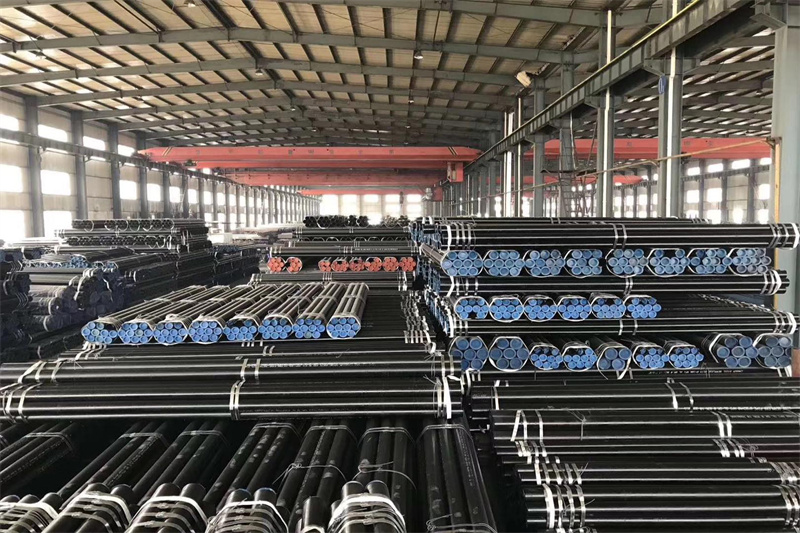
Tianjin Sanon Steel Pipe Co., Ltd. is a stockist. Our stock factory is in Cangzhou City, Hebei Province. Our main sources of goods are boiler pipes, and the representative materials are ASTM A335 P5/P11/P91/P92, ASME SA-106/SA-106M GR.B, GB/T 3087-2008 10#/20#. The representative materials of pipeline pipes are API 5L, API 5CT, the representative materials of petroleum cracking pipes GB/T 9948 are 15MoG/12CrMoVG. GB/T 6479-2013 represents the material 10#/20#, heat exchanger tubes SA179/SA210/SA192, etc., mechanical tubes GB/T 8162 represent the material 10#/20#/Q345/42CrMo, EN10210 represents the material S355JOH/S355J2H, gas cylinder tubes GB1 8248, represent the material 34CrMo4/30CrMo.
In the field of carbon steel pipes, ASTM A500 Grade C and ASTM A106 Grade C are two frequently referenced material standards. Although both are carbon steels and share the “Grade C” designation, they are fundamentally different in design philosophy, manufacturing processes, and application scenarios. This article provides a detailed comparison from multiple dimensions, including standard definitions, chemical composition, mechanical properties, dimensional specifications, and applicable environments.
1. Standard Definition and Primary Applications
ASTM A500 – full title Standard Specification for Cold-Formed Welded and Seamless Carbon Steel Structural Tubing in Rounds and Shapes. As the name suggests, this is a structural tubing standard, applicable to cold-formed welded and seamless carbon steel round, square, rectangular, and special‑shape structural tubes. It is mainly used in building frames, bridges, and other structures for welded, riveted, or bolted connections. ASTM A500 covers grades A, B, C, and D, with Grade C being the highest‑strength grade commonly used.
ASTM A106 – full title Standard Specification for Seamless Carbon Steel Pipe for High‑Temperature Service. This is a high‑temperature pressure pipe standard, applicable only to seamless carbon steel pipes, specifically designed for conveying steam, fluids, and other media under high‑temperature and high‑pressure conditions. ASTM A106 covers grades A, B, and C, with Grade C being the highest‑strength grade.
One‑sentence core distinction: A500 Grade C is a load‑bearing structural tube; A106 Grade C is a pressure pipe for fluid conveyance.
2. Manufacturing Process and Product Forms
The two standards differ substantially in manufacturing method and available shapes:
| Aspect | ASTM A500 Grade C | ASTM A106 Grade C |
|---|---|---|
| Manufacturing | Cold‑formed welded (ERW) or seamless | Seamless only (hot‑finished or cold‑drawn) |
| Shapes | Round, square, rectangular, and special sections | Round only |
| Ordering method | By outside diameter × wall thickness (OD × WT) | By nominal pipe size (NPS) and schedule number |
The ability of A500 to cover square, rectangular, and other non‑circular sections is a direct reflection of its scope – “in Rounds and Shapes” – which A106 does not possess.
3. Dimensional Range
ASTM A500 Grade C: Applicable to tubes with a periphery not exceeding 2235 mm (88 in.) and wall thickness not exceeding 25.4 mm (1 in.). Common square tube sizes can reach 22 in. × 22 in. Wall thickness tolerance: the minimum measured wall thickness shall not be less than 90% of the specified wall thickness.
ASTM A106 Grade C: Applicable to seamless pipes with nominal pipe sizes NPS ⅛ through NPS 48 (DN 6 through DN 1200), with wall thicknesses per ASME B36.10M (schedules 10 through 160, XXH, etc.). Wall thickness tolerance: the minimum measured wall thickness shall not be less than 87.5% of the specified wall thickness.
4. Chemical Composition Comparison
The differences in chemical composition reflect the distinct performance requirements. A106 Grade C requires silicon (Si ≥ 0.10%) to improve heat resistance and oxidation resistance, whereas A500 Grade C has no silicon requirement. A106 also imposes tighter limits on harmful impurities such as phosphorus and sulfur to ensure reliability under high‑temperature and high‑pressure service.
| Element (max, %) | ASTM A500 Grade C | ASTM A106 Grade C |
|---|---|---|
| Carbon (C) | 0.27 (product analysis) | 0.35 |
| Manganese (Mn) | 1.40 (product analysis) | 0.29 – 1.06 |
| Phosphorus (P) | 0.045 (product analysis) | 0.035 |
| Sulfur (S) | 0.045 (product analysis) | 0.035 |
| Silicon (Si) | Not required | ≥ 0.10 |
Notably, the carbon content of A500 Grade C (0.27%) is lower than that of A106 Grade C (0.35%), which gives A500 Grade C better weldability and reduces the risk of cracking during welding.
5. Mechanical Properties Comparison
The strength targets differ: A500 Grade C has a higher yield strength, making it better suited for resisting permanent deformation in structural members, while A106 Grade C has a higher tensile strength, reflecting its capability to withstand internal pressure and prevent burst failures.
| Property | ASTM A500 Grade C | ASTM A106 Grade C |
|---|---|---|
| Minimum Yield Strength | 345 MPa (50,000 psi) | 275 MPa (40,000 psi) |
| Minimum Tensile Strength | 425 MPa (62,000 psi) | 485 MPa (70,000 psi) |
| Minimum Elongation | 21% | Generally higher, suitable for bending, flanging, etc. |
A106 Grade C offers better ductility, making it suitable for bending, flanging, and other pipe‑forming operations. A500 Grade C, on the other hand, achieves its high strength through work hardening during cold forming.
6. Applicable Environments and Engineering Codes
The two standards are used in distinctly different environments and follow different design codes:
| Aspect | ASTM A500 Grade C | ASTM A106 Grade C |
|---|---|---|
| Temperature range | Ambient and low‑temperature static structures; no high‑temperature performance requirements | Specifically designed for high‑temperature service, up to approximately 427°C and above |
| Typical applications | Building frames, bridge trusses, machinery supports, tower structures | Refineries, power plants, boiler high‑temperature/high‑pressure steam and process piping |
| Design codes | AISC (American Institute of Steel Construction) structural codes | ASME B31.1 (Power Piping), B31.3 (Process Piping), and other pressure piping codes |
7. Selection Guidelines
In practical engineering material selection, the following principles can be applied:
- Shape first: If the drawing calls for square, rectangular, or special‑shaped tubing, choose ASTM A500 Grade C – A106 does not produce these shapes at all.
- For round tubes, consider the use: If it is a structural column, diagonal brace, or truss member subjected to wind loads, dead loads, or other external forces → choose ASTM A500 Grade C. If it is a process pipe connecting equipment, conveying steam or hydrocarbon fluids under high internal pressure and temperature → choose ASTM A106 Grade C.
- Temperature: For ambient‑temperature structural components, select A500 Grade C; for piping systems that will operate continuously at elevated temperatures (≥350°C), select A106 Grade C.
In short: for structural load‑bearing, use A500 Grade C; for high‑temperature fluid conveyance, use A106 Grade C. The two are not interchangeable in engineering.
Post time: Jun-22-2026


