
If you want to know more information, like quotation, products, solutions, etc., please contact us online.
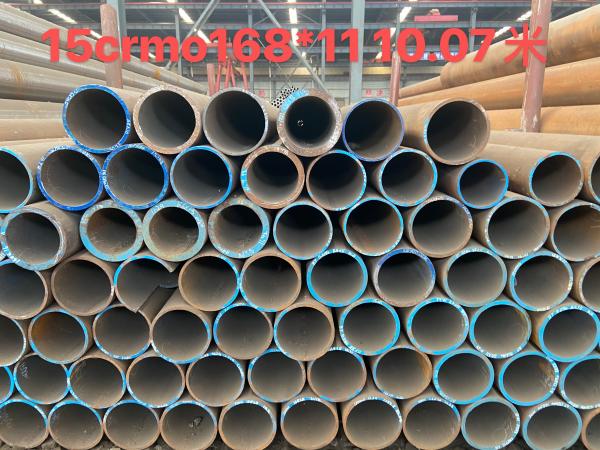
Tianjin Sanon Steel Pipe Co., Ltd. is a stockist. Our stock factory is in Cangzhou City, Hebei Province. Our main sources of goods are boiler pipes, and the representative materials are ASTM A335 P5/P11/P91/P92, ASME SA-106/SA-106M GR.B, GB/T 3087-2008 10#/20#. The representative materials of pipeline pipes are API 5L, API 5CT, the representative materials of petroleum cracking pipes GB/T 9948 are 15MoG/12CrMoVG. GB/T 6479-2013 represents the material 10#/20#, heat exchanger tubes SA179/SA210/SA192, etc., mechanical tubes GB/T 8162 represent the material 10#/20#/Q345/42CrMo, EN10210 represents the material S355JOH/S355J2H, gas cylinder tubes GB1 8248, represent the material 34CrMo4/30CrMo.
Chromium molybdenum (Cr Mo) seamless steel tubes for boiler service are core materials used in utility boilers, industrial boilers, and petrochemical furnaces under high temperature and high pressure. They can be classified according to the following technical dimensions.
- Classification by Steel Grade or Type (Core Classification)
The grade of Cr Mo seamless tube directly determines its applicable temperature and pressure. Common grades and corresponding standards are listed below.
Steel Grade or Type
Standard
Cr content (percent)
Mo content (percent)
Applicable metal temperature (degree Celsius)
Typical application
15CrMoG
GB/T 5310
0.80 to 1.10
0.25 to 0.35
up to 550
superheater, reheater, header
12Cr1MoVG
GB/T 5310
0.90 to 1.20
0.25 to 0.35
up to 580
high temperature superheater, high temperature reheater
12Cr2MoG
GB/T 5310
2.00 to 2.50
0.90 to 1.10
up to 600
subcritical or supercritical boiler high temperature components
T11 / P11
ASTM A213 / A335
1.00 to 1.50
0.44 to 0.65
up to 540
boiler heating surface tubes (T11), headers and piping (P11)
T22 / P22
ASTM A213 / A335
2.00 to 2.50
0.87 to 1.13
up to 580
high temperature superheater, high temperature reheater
T91 / P91
ASTM A213 / A335
8.00 to 9.50
0.85 to 1.05
up to 650
ultra supercritical boiler high temperature heating surface
T92 / P92
ASTM A213 / A335
8.50 to 9.50
0.30 to 0.60
up to 650
components requiring even higher creep strength
Note: In GB/T 5310, the suffix G stands for high pressure boiler tube. In American standards, T series (Tube) is used for small diameter heating surface tubes, while P series (Pipe) is used for large diameter headers and piping.
- Classification by Boiler Component Position
Component position
Common grades
Typical metal temperature (degree Celsius)
Key requirements
Water wall tube
15CrMoG, 20G
400 to 500
oxidation resistance, sufficient creep strength
Superheater tube
12Cr1MoVG, T91, T92
550 to 650
excellent high temperature creep strength and steam oxidation resistance
Reheater tube
12Cr1MoVG, T91
550 to 600
similar to superheater but with slightly thinner wall
Economizer tube
15CrMoG, 20G
below 450
corrosion resistance for low temperature section
Header
12Cr1MoVG, P22, P91
close to steam temperature
thick wall, pressure resistance, good weldability
Main steam piping
P22, P91, P92
540 to 620
high creep strength, thermal fatigue resistance
- Classification by Manufacturing Process
Although all are seamless tubes, boiler grade Cr Mo tubes have special process requirements.
Hot rolling or hot extrusion: high production efficiency, wide size range, surface with oxide scale. Suitable for medium to large diameter, thick wall tubes such as headers and main steam pipes.
Cold drawing or cold rolling: high dimensional accuracy (up to plus or minus 0.05 mm), smooth surface. Suitable for small diameter, thin wall tubes such as superheater and reheater serpentine coils.
Cold drawing with bright heat treatment: high internal cleanliness, no oxide scale. Suitable for high pressure feedwater tubes and precision instrument tubes.
Because of their high alloy content, Cr Mo steels require strict control of heating temperature and deformation rate during hot rolling or hot extrusion to avoid cracking or non uniform microstructure.
- Classification by Outside Diameter and Wall Thickness
Category
Outside diameter range (mm)
Wall thickness range (mm)
Typical application
Small diameter tube
16 to 89
2 to 8
superheater and reheater serpentine coils
Medium diameter tube
89 to 219
6 to 25
downcomer and connecting tubes
Large diameter tube
219 to 610
20 to 60
headers and main steam pipes
- Classification by Applicable Standard
Different export markets require different standard systems.
Chinese standard: GB/T 5310, grades such as 15CrMoG, 12Cr1MoVG, 12Cr2MoG.
American standard: ASTM A213 for small diameter, A335 for large diameter, grades such as T11, T22, T91, P11, P22, P91.
European standard: EN 10216-2, grades such as 13CrMo4-5, 10CrMo5-5, X10CrMoVNb9-1 (equivalent to T91).
German standard: DIN 17175 (replaced by EN but still used for old projects), grades such as 13CrMo44, 10CrMo910.
International standard: ISO 9329-2, corresponding grades.
- Classification by Delivery Condition
The delivery condition of Cr Mo tubes directly affects their service performance.
Normalized and tempered (N plus T): normalization followed by high temperature tempering. Used for most Cr Mo tubes such as 15CrMoG and 12Cr1MoVG.
Normalized (N): only normalization. Used for applications where low temperature impact requirements are not critical.
Quenched and tempered (Q plus T): quenching followed by tempering. Used for high strength and high toughness requirements, for example some T91 and P91.
Solution treated (S): heated to high temperature then rapidly cooled. Used for austenitic stainless Cr Mo tubes such as TP347H (contains Cr but not typical Cr Mo steel).
Post time: Jun-09-2026


