
If you want to know more information, like quotation, products, solutions, etc., please contact us online.
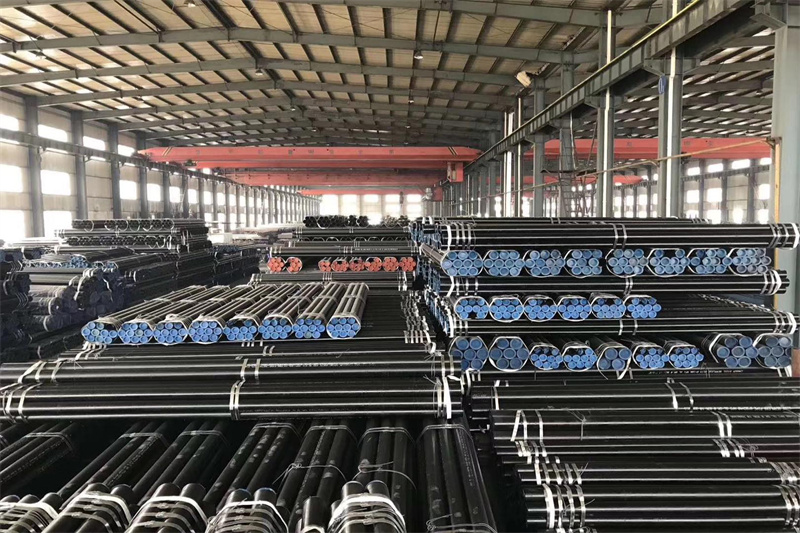
Tianjin Sanon Steel Pipe Co., Ltd. is a stockist. Our stock factory is in Cangzhou City, Hebei Province. Our main sources of goods are boiler pipes, and the representative materials are ASTM A335 P5/P11/P91/P92, ASME SA-106/SA-106M GR.B, GB/T 3087-2008 10#/20#. The representative materials of pipeline pipes are API 5L, API 5CT, the representative materials of petroleum cracking pipes GB/T 9948 are 15MoG/12CrMoVG. GB/T 6479-2013 represents the material 10#/20#, heat exchanger tubes SA179/SA210/SA192, etc., mechanical tubes GB/T 8162 represent the material 10#/20#/Q345/42CrMo, EN10210 represents the material S355JOH/S355J2H, gas cylinder tubes GB1 8248, represent the material 34CrMo4/30CrMo.
In the fields of thermal power generation and petrochemical processing, where high temperatures and high pressures are the norms, A335 P91 alloy steel is a critical material. It is widely used in main steam lines and reheat hot sections due to its excellent high-temperature strength, creep resistance, and oxidation resistance. However, a common question arises during procurement or use: What is the difference between Type 1 and Type 2? This article provides a detailed explanation.
Core Difference: Manufacturing Process & Microstructure
The chemical composition requirements for A335 P91 are defined by the ASTM A335 standard itself. The classification of Type 1 and Type 2 does not originate from ASTM A335, but from another crucial supporting standard: ASTM A213 (Standard Specification for Seamless Ferritic and Austenitic Alloy-Steel for Boiler, Superheater, and Heat-Exchanger Tubes).
The fundamental difference between the two types lies in the final manufacturing heat treatment process, which directly results in a difference in their microstructure.
It undergoes Normalizing + Tempering. The pipe is normalized above the austenitizing temperature and then subjected to high tempering.
Microstructure: It achieves a fully tempered martensite structure. This is the most classic and common condition for P91 steel, offering the best overall combination of mechanical properties.
It undergoes Subcritical Annealing. The pipe is annealed at a temperature below the Ac1 (lower critical temperature).
Microstructure: Its structure consists of annealed ferrite + carbides. It does not undergo the full normalizing process to form martensite.
Why Does Type 2 Exist?
The Type 2 process exists primarily to meet extremely tight dimensional tolerances.
The Normalizing + Tempering process can cause slight distortion or changes in the ovality of the pipe, which can be problematic for applications with ultra-high precision requirements.
• Subcritical Annealing is performed at a lower temperature and is a gentler process, better preserving the precise geometry and dimensions of the pipe after cold working.
Performance Differences & Important Caution
The most critical difference lies in mechanical properties, particularly high-temperature strength.
• Type 1 (N&T): Possesses the full high strength and high creep strength required by the standard specification. It is the preferred and standard condition for design and application.
• Type 2 (Annealed): Its strength is significantly lower than Type 1. Its high-temperature strength and creep properties cannot meet the requirements for P91 material as per the ASTM A335 standard.
Therefore, Type 2 material must NEVER be directly used in high-temperature/pressure service! If pipes in the subcritical annealed condition (Type 2) are procured, the manufacturer or end-user MUST perform a full normalizing and tempering heat treatment on them before final installation. This transforms their microstructure into fully tempered martensite (i.e., converting it to Type 1 condition), thereby achieving the required mechanical properties.
Summary Comparison Table
In simple terms, A335 P91 Type 2 is a "semi-finished" condition, which sacrifices all strength properties for ease of fabrication and guaranteed dimensions. On the other hand, Type 1 is the "finished product" condition, possessing all the necessary properties to handle high-temperature and high-pressure environments.
During procurement and inspection, it is crucial to specify which condition you require and to verify the heat treatment information on the material certificates. Ensuring that the installed pipes have the correct microstructure and properties is key to guaranteeing the safe and reliable operation of power plants and industrial facilities.
Post time: Sep-18-2025


